## Building my own knowledge while using AI
### AI writes better, but is my own knowledge growing?
HALLYM CMDS PKM CONFERENCE 2026
Human-Centered Reading and Writing
Achmage (안창현) · Hallym University Media School · 2026.09.21
Source · [Slide 1](https://achmage-slides.vercel.app/decks/human-reading-writing-2026/index.html#1)
### Interests by group: the rankings reverse
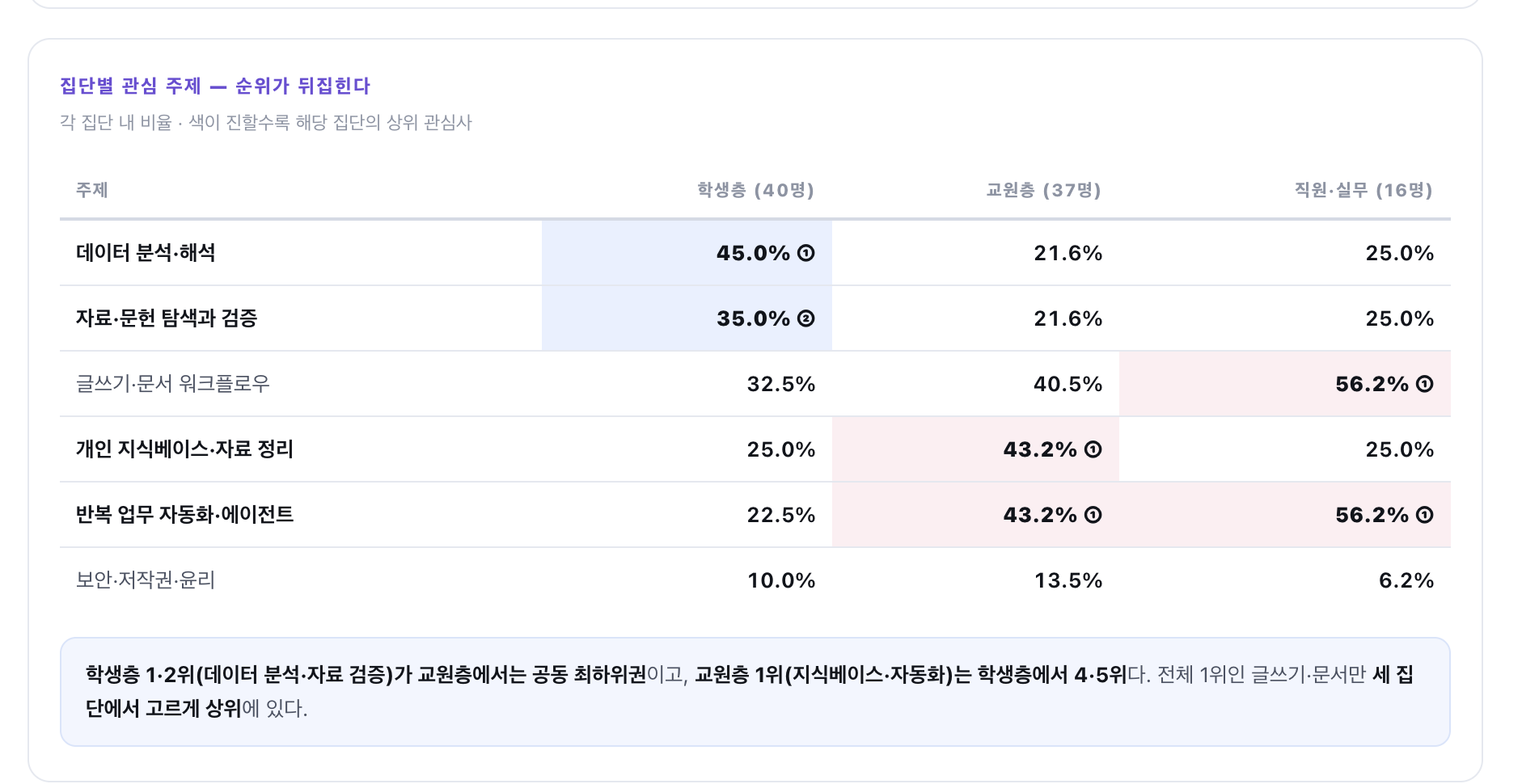
Source · [Slide 2](https://achmage-slides.vercel.app/decks/human-reading-writing-2026/index.html#2)
### Different questions lead back to records.
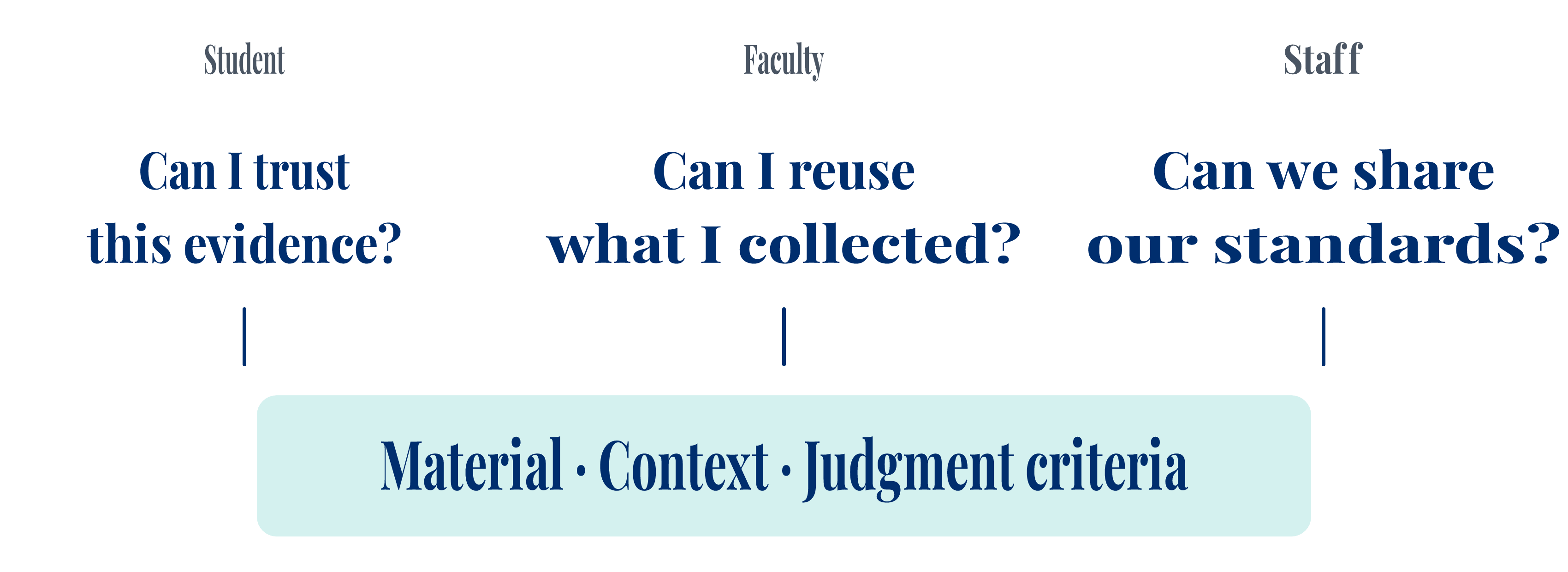
Students ask whether evidence is trustworthy; faculty ask whether collected material can be reused; staff ask whether their working standards can be shared. Different questions return to recording **material, context, and criteria for judgment** for future use.
Source · [Slide 3](https://achmage-slides.vercel.app/decks/human-reading-writing-2026/index.html#3)
## Keep the originals and control execution
### Important features of Obsidian
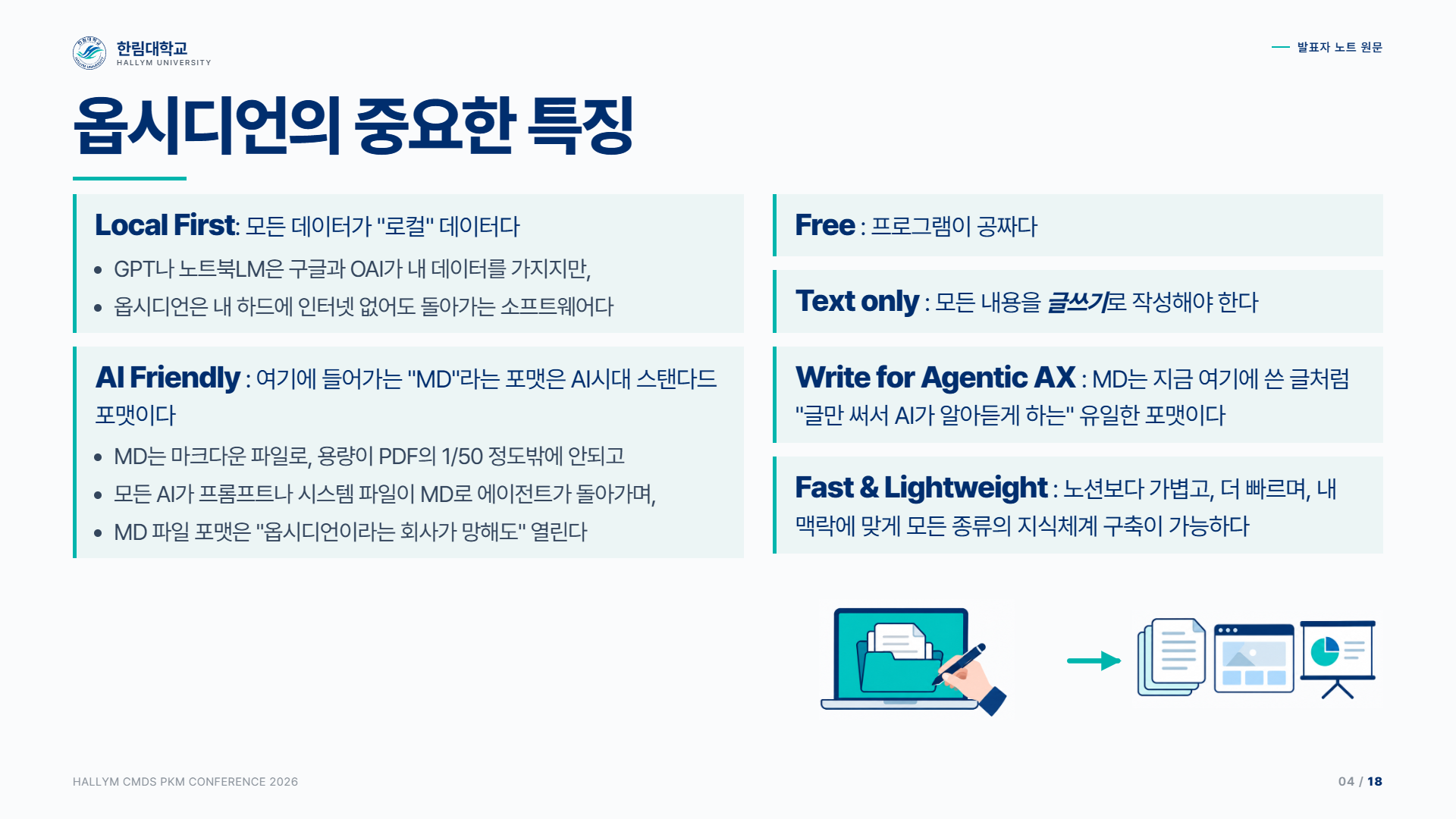
The presentation describes Obsidian's features as follows.
* **Local First:** All data is local. GPT and NotebookLM keep data in OpenAI and Google services, whereas Obsidian runs on my own drive, even without an internet connection.
* **AI Friendly:** The presentation describes Markdown (MD) as a standard format for the AI era. It emphasizes files roughly one-fiftieth the size of PDFs, the use of MD for AI prompts, system files, and agents, and files that remain readable even if the company behind Obsidian disappears.
* **Free:** The program is free to use.
* **Text only:** All content is written.
* **Write for Agentic AX:** The original calls MD the only format in which writing alone lets AI understand.
* **Fast & Lightweight:** The presentation explains that it is lighter and faster than Notion and lets users build a knowledge system around their own context.
These points preserve the claims and wording of the presentation at the time.
Source · [Slide 4](https://achmage-slides.vercel.app/decks/human-reading-writing-2026/index.html#4)
### I want to control both the originals and the execution environment.
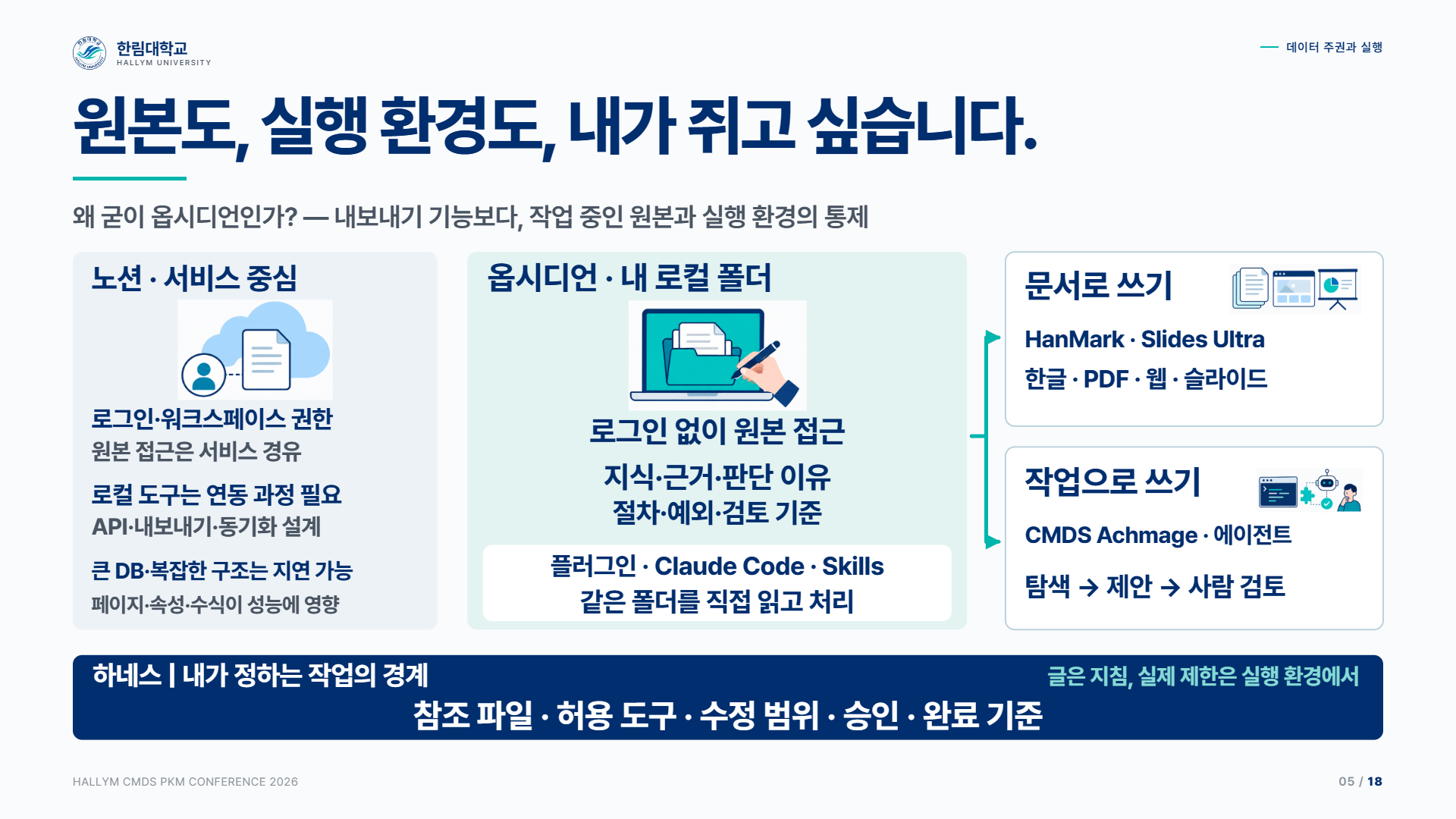
Why specifically Obsidian? The focus is less on exporting and more on **control over working originals and the execution environment** during the work.
| Notion · Service-centered | Obsidian · My local folder |
| --- | --- |
| Access originals through login and workspace permissions | Access originals without logging in |
| Local-tool integration requires APIs, exports, and synchronization design | Plugins, Claude Code, and Skills read and process the same folder directly |
| Large databases and complex structures can introduce delays; pages, properties, and formulas affect performance | Store knowledge, evidence, reasons for judgment, procedures, exceptions, and review criteria locally |
* **Use as documents:** Create Hangul documents, PDFs, web pages, and slides with HanMark and Slides Ultra.
* **Use as workflows:** CMDS Achmage and agents connect exploration → proposals → human review.
* **Harness:** I define the boundaries through reference files, permitted tools, editing scope, approval, and completion criteria. Text provides instructions; actual restrictions are enforced by the execution environment.
Source · [Slide 5](https://achmage-slides.vercel.app/decks/human-reading-writing-2026/index.html#5)
## Reading a summary and understanding for myself
### Fifteen minutes later, I asked about one paragraph in the source.
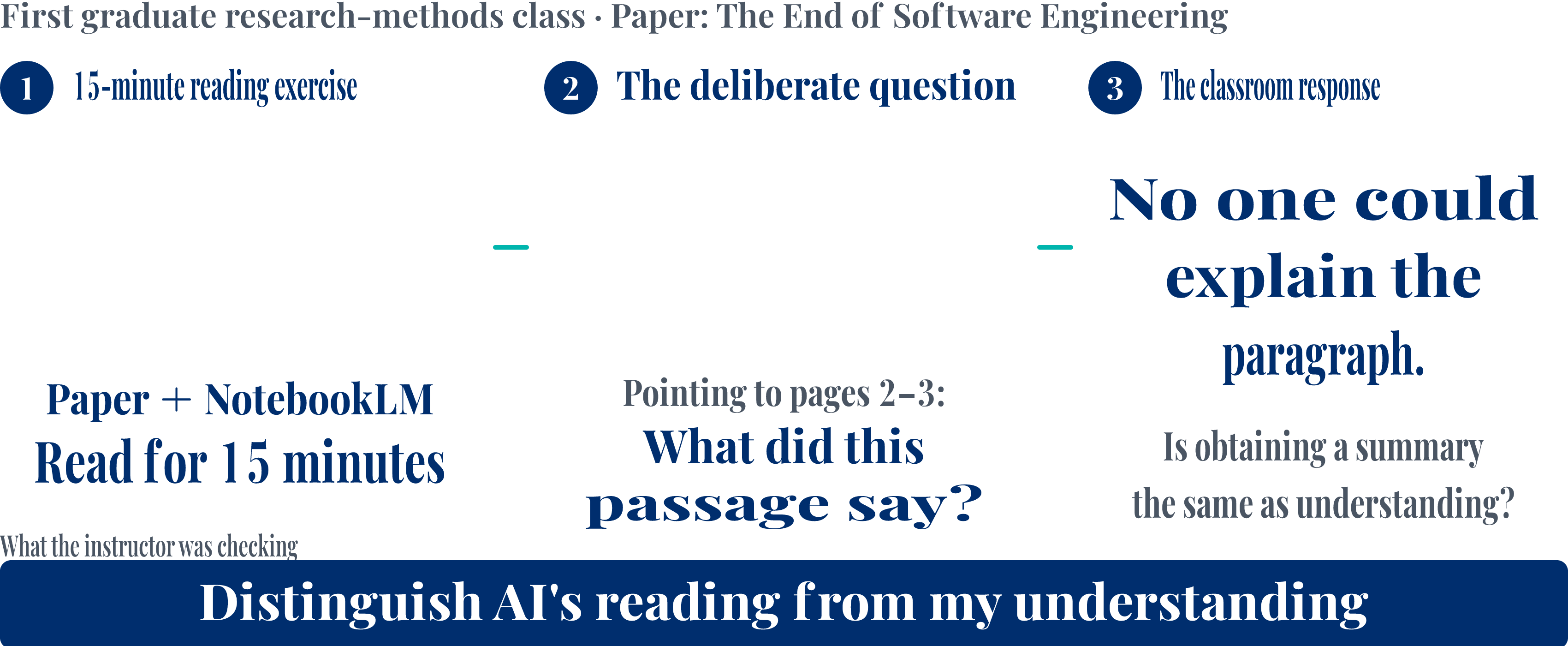
In the first graduate research-methods class, we used a paper _The End of Software Engineering_ and NotebookLM for **a fifteen-minute reading exercise** . I pointed to pages two and three and asked what a passage said, but received no explanation of the paragraph.
What the instructor wanted to check was **the difference between AI's reading output and my own understanding** . Is obtaining a summary the same as understanding?
Source · [Slide 6](https://achmage-slides.vercel.app/decks/human-reading-writing-2026/index.html#6)
### Where is the evidence that I have read it?

I collected material for the theoretical background of a paper on media literacy × AaaS. Reading notes retain more than a summary: **why I read it, what I thought, and what I need to check next** are recorded too.
Source · [Slide 7](https://achmage-slides.vercel.app/decks/human-reading-writing-2026/index.html#7)
### The same AI, different reading.
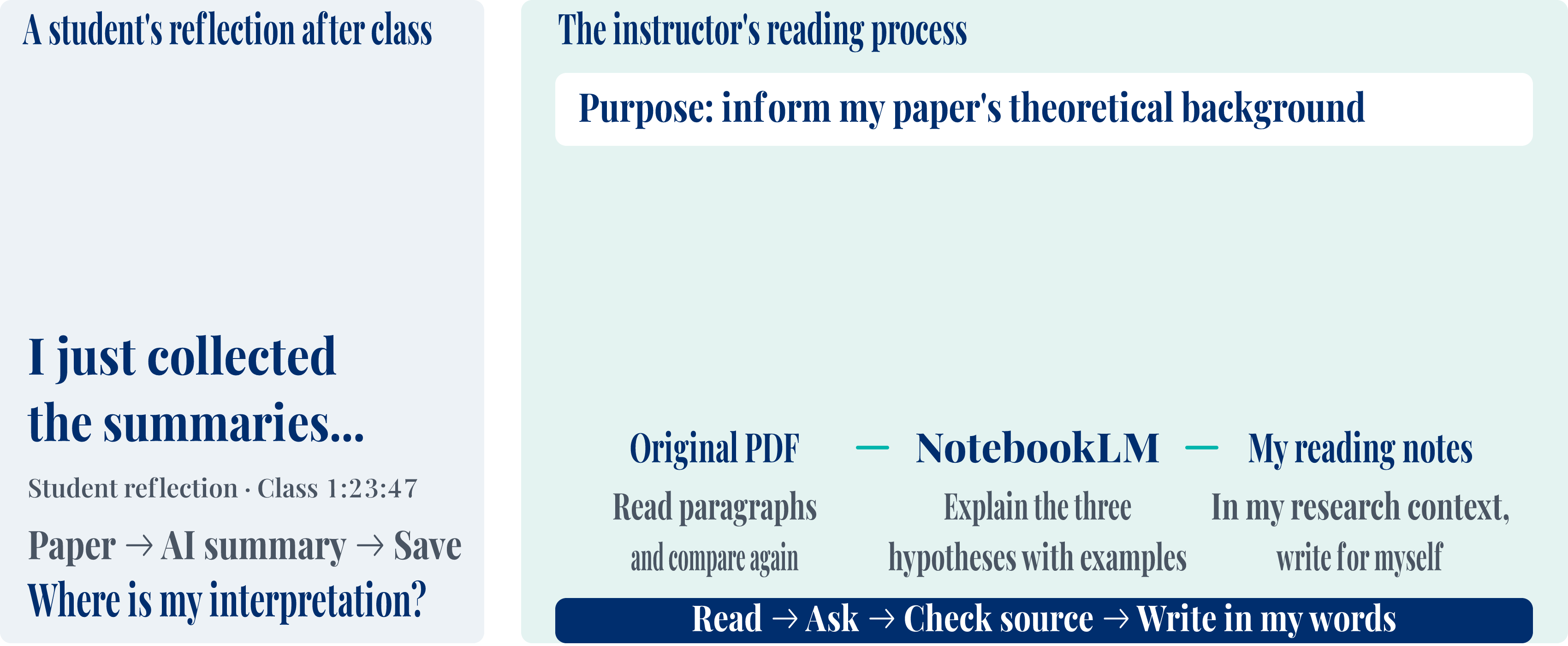
After class, a student said, I just collected the summaries and wrote from them (excerpt from a student reflection, class 1:23:47). Where does my interpretation remain in a process of paper → AI summary → storage?
The instructor's demonstration aimed to inform the theoretical background of their own paper. They read and compared paragraphs in the original PDF, asked NotebookLM to explain three hypotheses with examples, and wrote reading notes in their own research context.
**Read → Ask → Check the original → Write in my own words** is the sequence.
Source · [Slide 8](https://achmage-slides.vercel.app/decks/human-reading-writing-2026/index.html#8)
## Preserve the context of judgment alongside the material
### The material remains; the judgment passes in conversation.
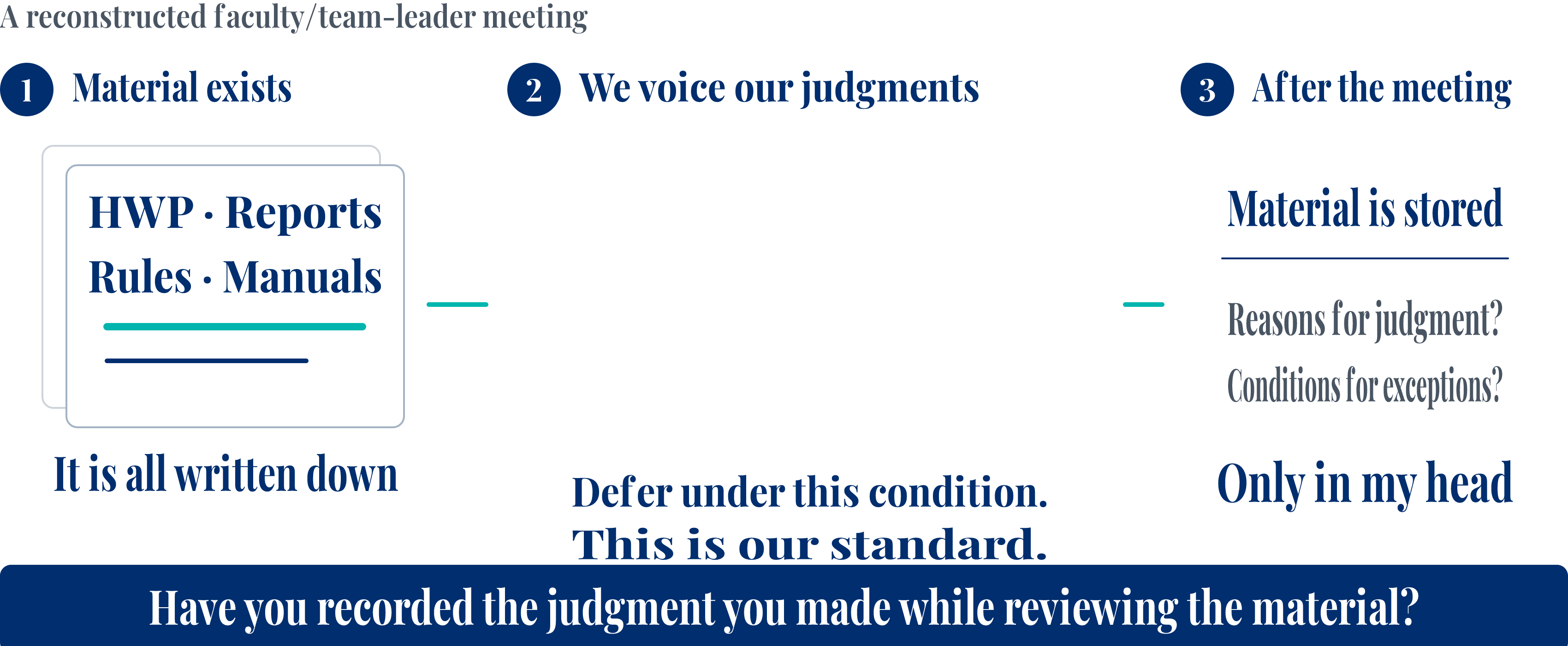
This example reconstructs a faculty/team-leader meeting. Looking at Hangul reports, regulations, and manuals, participants say that everything is written down. They decide to defer under certain conditions or apply a particular standard, but after the meeting only the documents are kept.
The reasons for judgment and the conditions for exceptions remain only in my head. What came to mind while looking at the material **Have you recorded that judgment yourself?**
Source · [Slide 9](https://achmage-slides.vercel.app/decks/human-reading-writing-2026/index.html#9)
### The same AI, different outcomes.
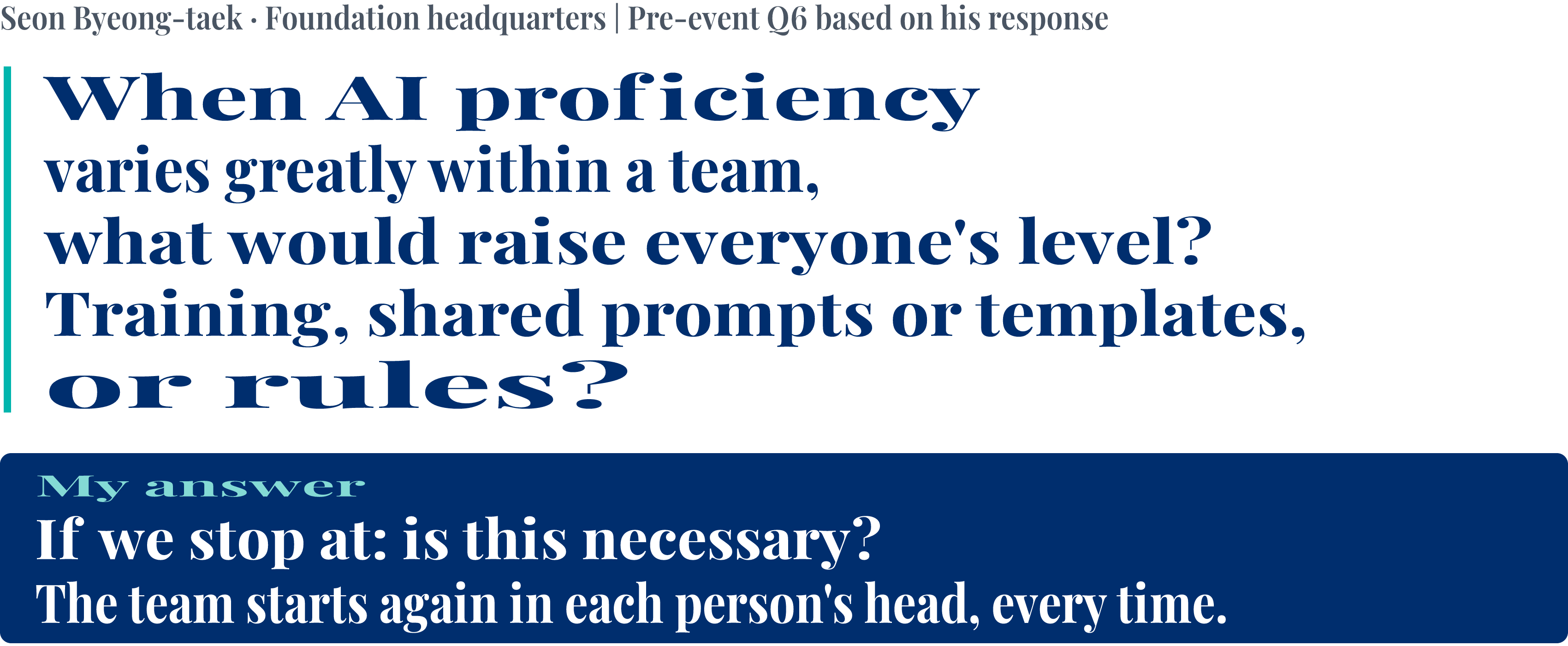
Pre-event survey question Q6, constructed from the response of team leader Seon Byeong-taek at the foundation headquarters.
> When AI proficiency varies greatly within an organization, what would raise everyone's level: training, shared prompts or templates, or rules?
My response to this question is as follows. **If we stop at asking whether all this is necessary, the team starts over inside each person's head every time.**
Source · [Slide 10](https://achmage-slides.vercel.app/decks/human-reading-writing-2026/index.html#10)
### You shared the prompt. Did you also share the criteria for judgment?
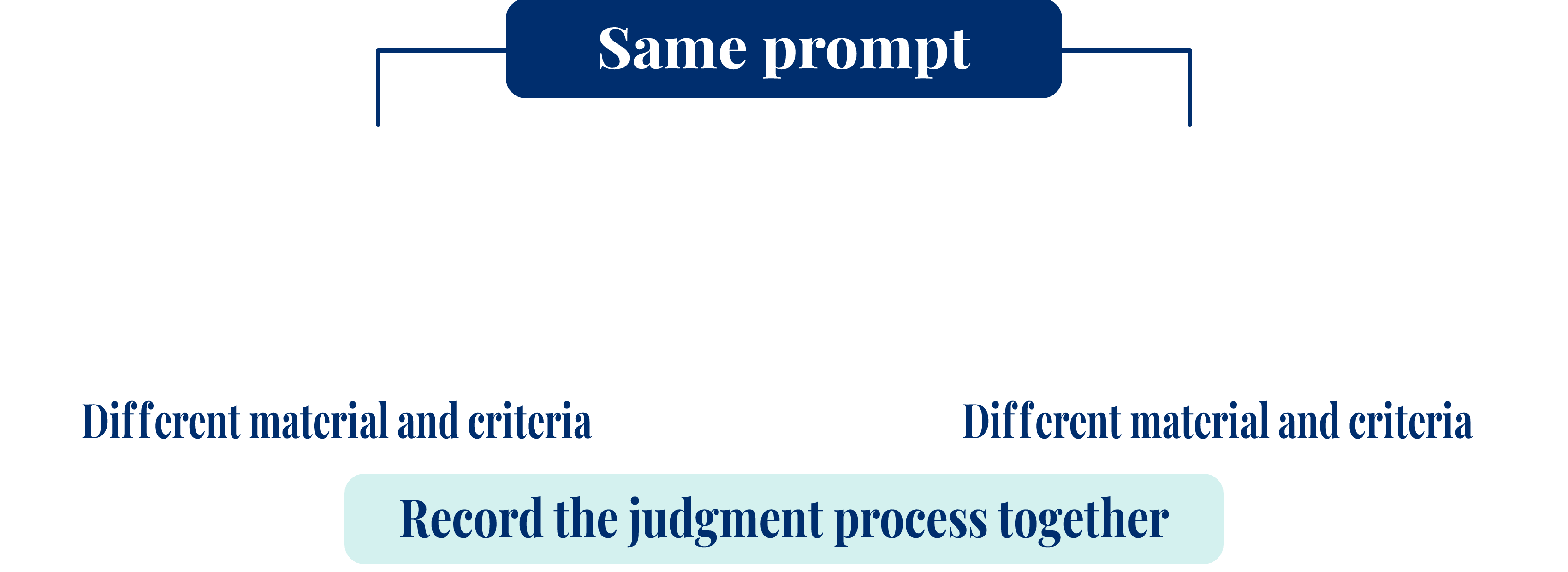
Even with the same prompt, different material and criteria lead to different results. **Start by recording the process of judgment together.**
Source · [Slide 11](https://achmage-slides.vercel.app/decks/human-reading-writing-2026/index.html#11)
### I must check what my own words mean.
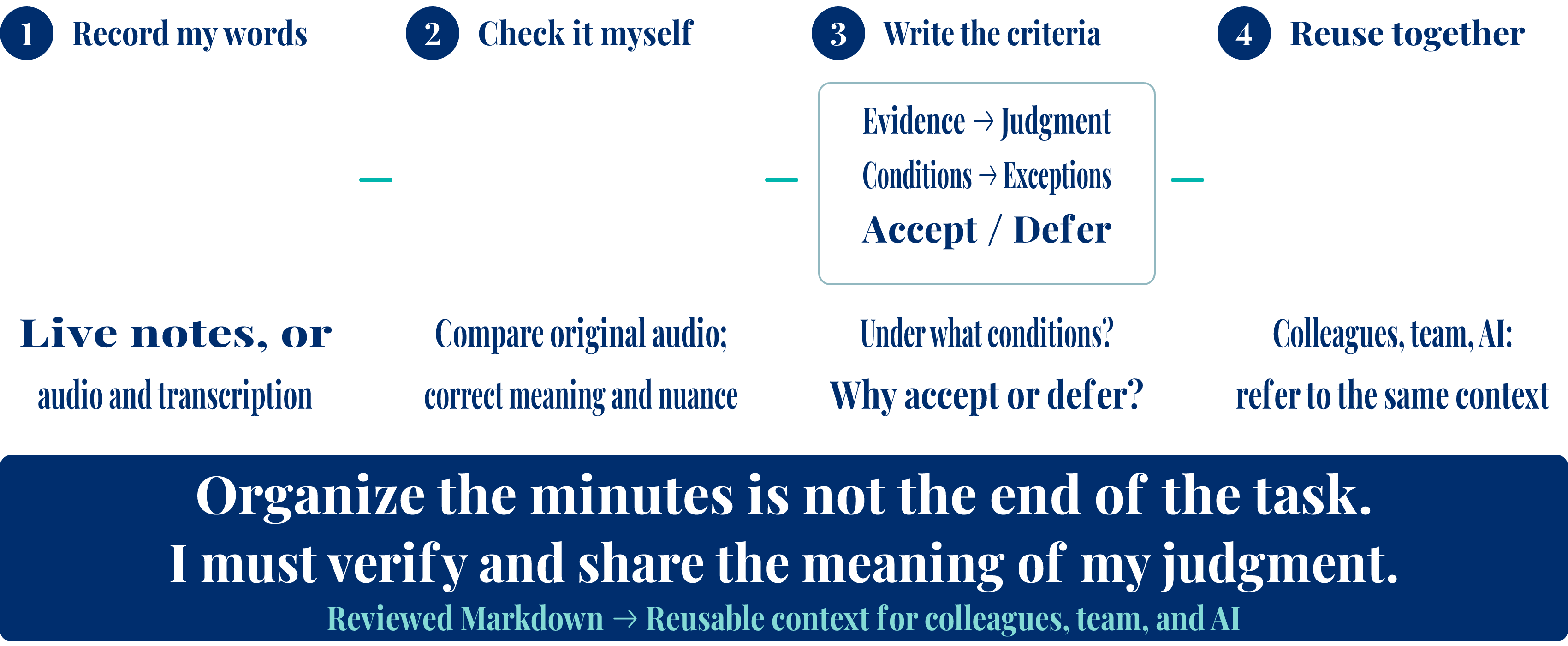
1. **Record what I say.** Use live notes or audio recording and transcription.
2. **Check it myself.** Compare it with the original audio and correct meaning and nuance.
3. **Write down the criteria.** Record evidence → judgment and conditions → exceptions, including why something was accepted or deferred under particular conditions.
4. **Reuse it together.** Colleagues, the team, and AI refer to the same context.
Asking someone to organize the minutes is not the end of the work. **I need to verify and share the meaning of my judgment.** A Markdown record I have reviewed becomes reusable context for colleagues, the team, and AI.
Source · [Slide 12](https://achmage-slides.vercel.app/decks/human-reading-writing-2026/index.html#12)
## Returning from records to my own writing
### The same body of text, many uses.

Reuse the manuscript I have reviewed **in Hangul documents, PDFs, web pages, and slides** . Keep the body of the text while expanding its uses.
Source · [Slide 13](https://achmage-slides.vercel.app/decks/human-reading-writing-2026/index.html#13)
### Where do you get stuck while writing?
Writing
Source · [Slide 14](https://achmage-slides.vercel.app/decks/human-reading-writing-2026/index.html#14)
### Searching for evidence, I lose the thought I was writing.
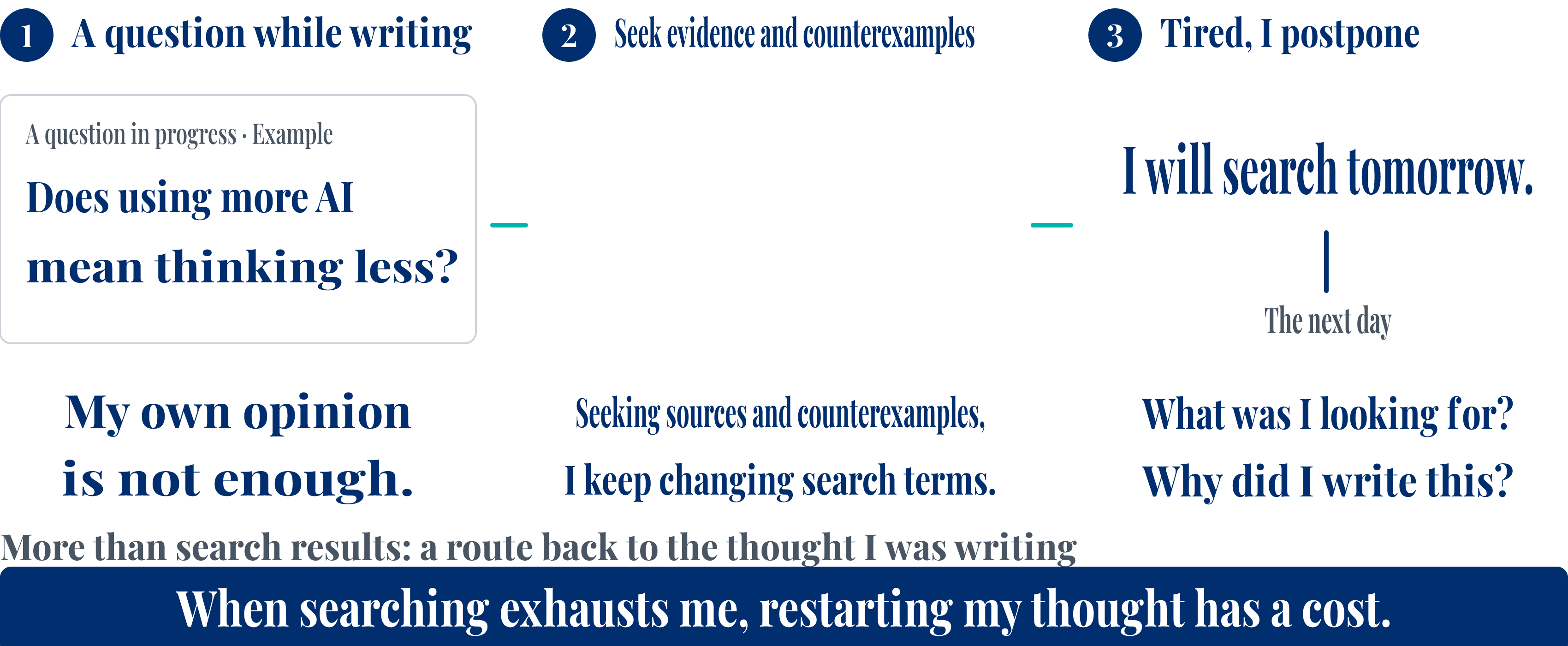
Imagine writing about whether extensive AI use makes us think less. Unable to conclude from opinion alone, I keep changing search terms to find evidence and counterevidence. If I grow tired and postpone the search, the next day I must ask again what I was looking for and why I wrote it.
What I need is more than search results: **a route back to the thought I was writing** . Exhaustion from searching creates the cost of restarting my thinking.
Source · [Slide 15](https://achmage-slides.vercel.app/decks/human-reading-writing-2026/index.html#15)
### Discuss with AI, write in my own words.
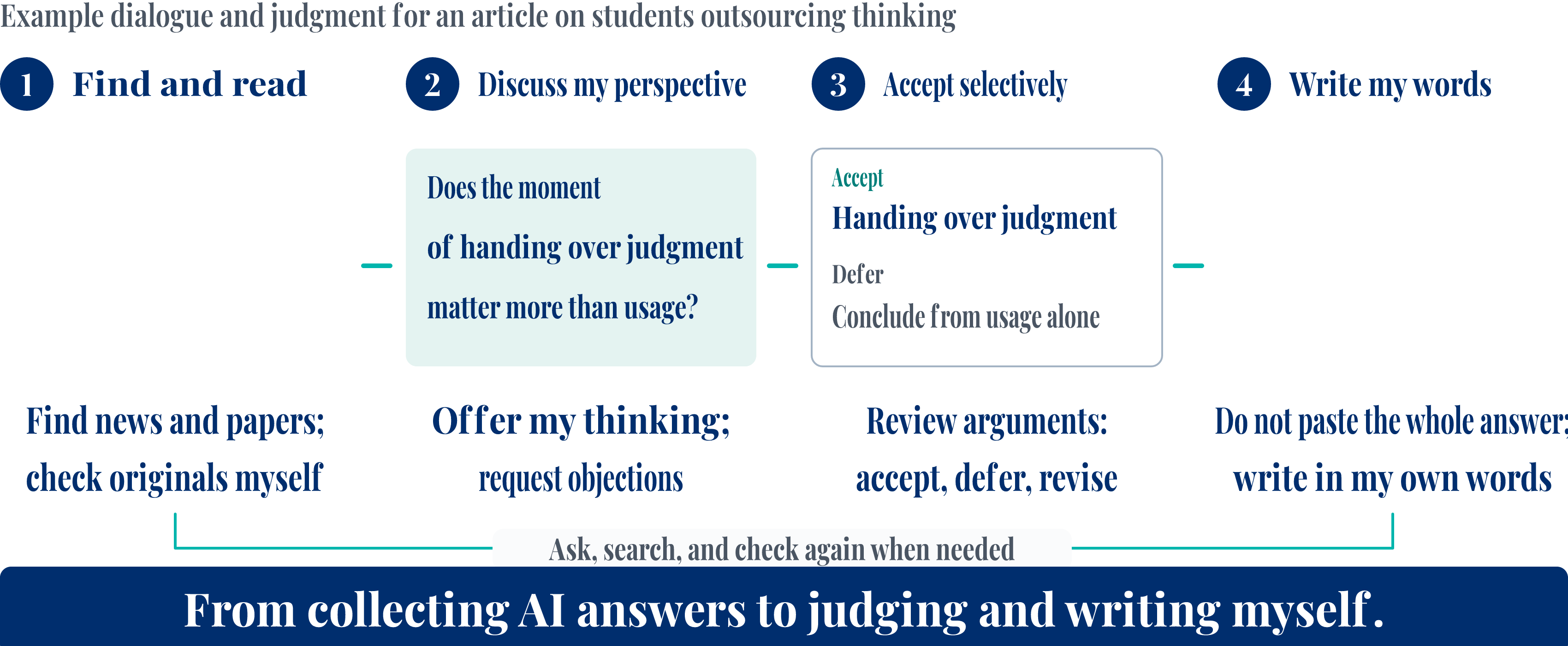
An example of dialogue and judgment while writing about university students outsourcing their thinking.
1. Find news and papers and read the original sources.
2. Discuss them from my perspective. Suggest that the moment of handing over judgment may matter more than usage volume, and ask for objections.
3. Review the arguments, then selectively accept, defer, or revise them. **The moment of handing over judgment** is accepted as an idea to pursue; **conclusions based only on usage volume** are deferred.
4. Write directly in my own words instead of copying the entire response.
Ask, search, and check again when needed. **Move from collecting AI answers toward making my own judgments and writing** for myself.
Source · [Slide 16](https://achmage-slides.vercel.app/decks/human-reading-writing-2026/index.html#16)
## Knowledge and execution that can be reused
### Records become media and software.
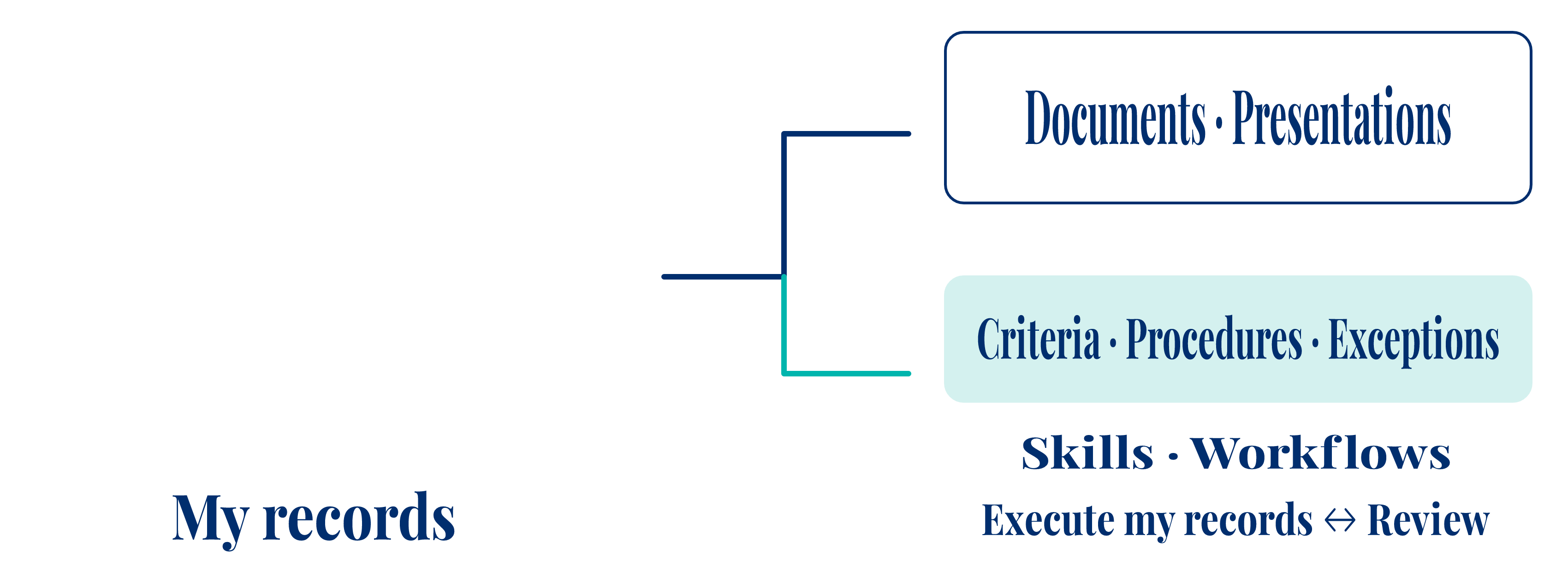
My records become documents and presentations; criteria, procedures, and exceptions lead to **Skills and workflows** . Execute according to my records, then review that execution.
Source · [Slide 17](https://achmage-slides.vercel.app/decks/human-reading-writing-2026/index.html#17)
### What is one line of my own judgment from today's reading?
I use AI so that I can write.
#### Why I accepted it. Why I deferred it.
Achmage (안창현) · Hallym University Media School
Source · [Slide 18](https://achmage-slides.vercel.app/decks/human-reading-writing-2026/index.html#18)