Web edition · 2026.06.10
Reading Discussions Become a Newsletter
Designing major courses in an AI era where writing becomes media. A 58-slide colloquium presentation connecting research, reading, recorded judgments, and production through each student's personal newsroom.
An English translation of the web edition, retaining the presentation's claims, figures, quotations, and visual material while refining headings and flow. The original Korean presentation transcript is also available separately.
An era of assessing process alongside results
Reading Discussions Become a Newsletter
Hallym University Media School Colloquium · 2026.06.10
Reading discussions become
a newsletter
Writing becomes media:
designing major courses in the AI era
Presented by · Achmage (안창현) (Achmage)
Source · Slide 1
Today's question
In the AI era,
what are we
being assessed on?
The process behind the outcome — and where that process is recorded.
Source · Slide 2
Introduction
Even a reporter with 20 years of experience
struggled with
the AI exam
SK AX AI Competency Certification — KBS News 9 (2026.06.01)
Source · Slide 3
Introduction
SK's AI competency certification exam appeared on the nine o'clock news
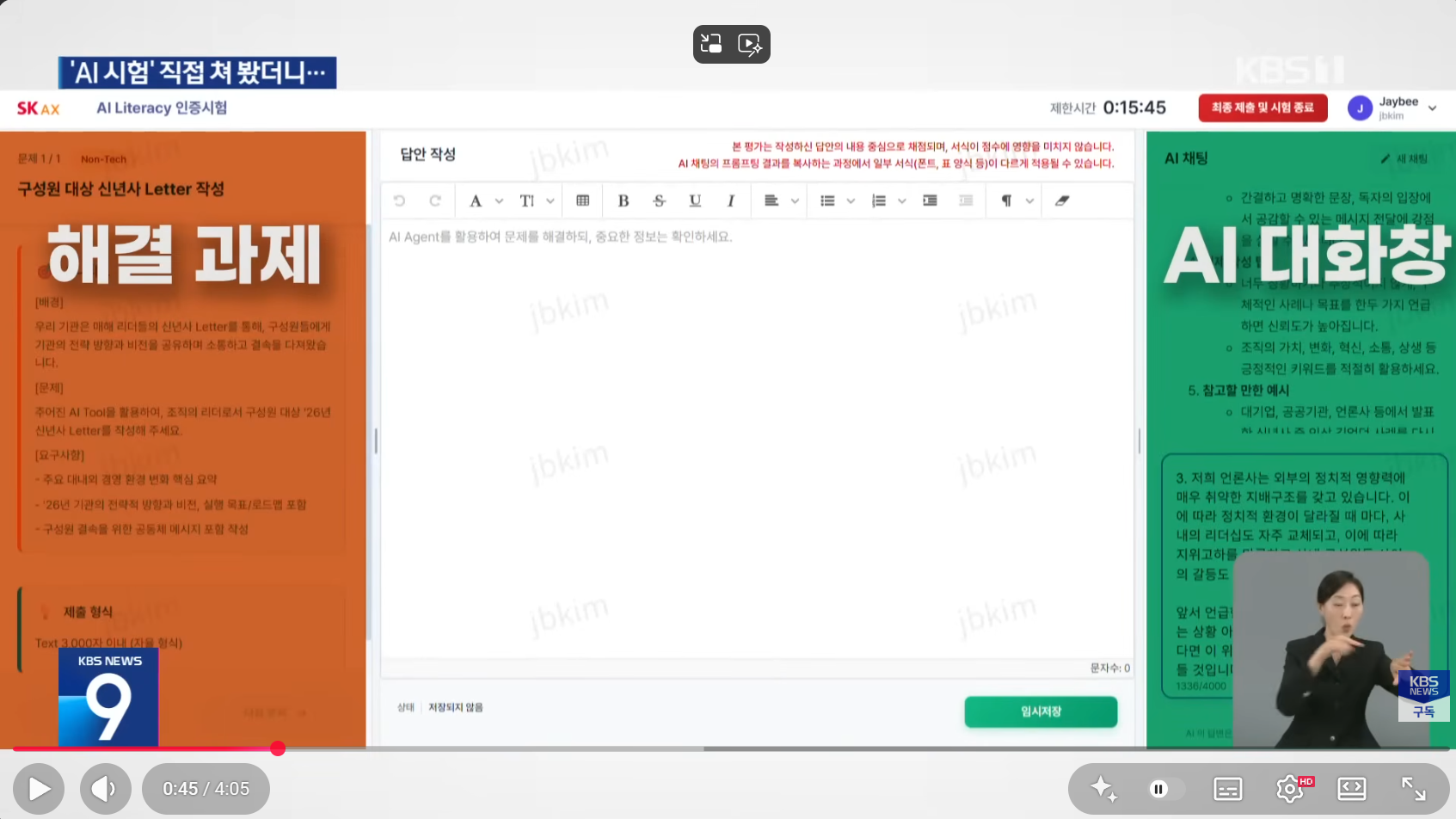
KBS News 9 (2026.06.01) · The AI exam shaping recruitment and promotion: we took it ourselves
Source · Slide 4
Introduction
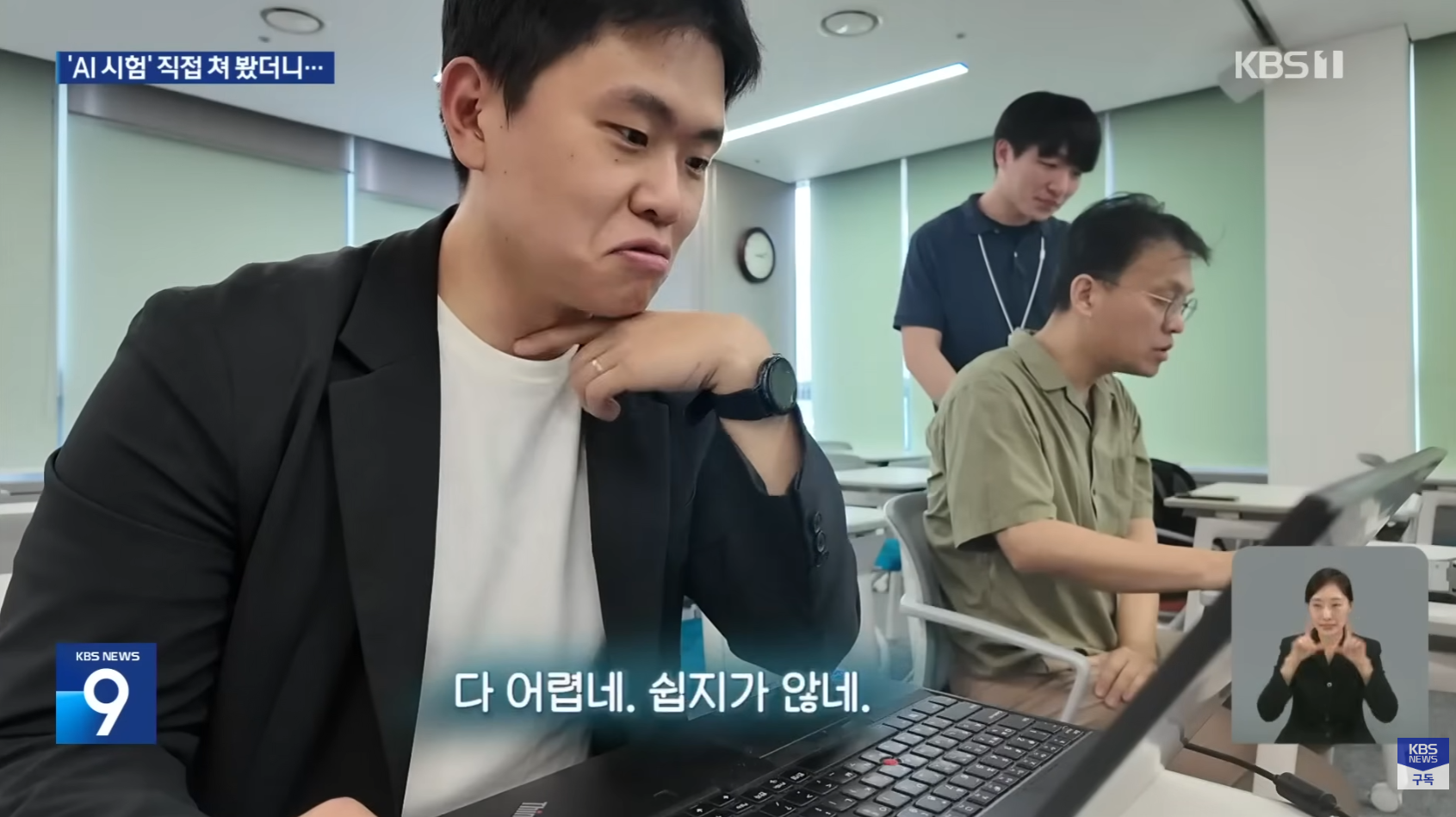
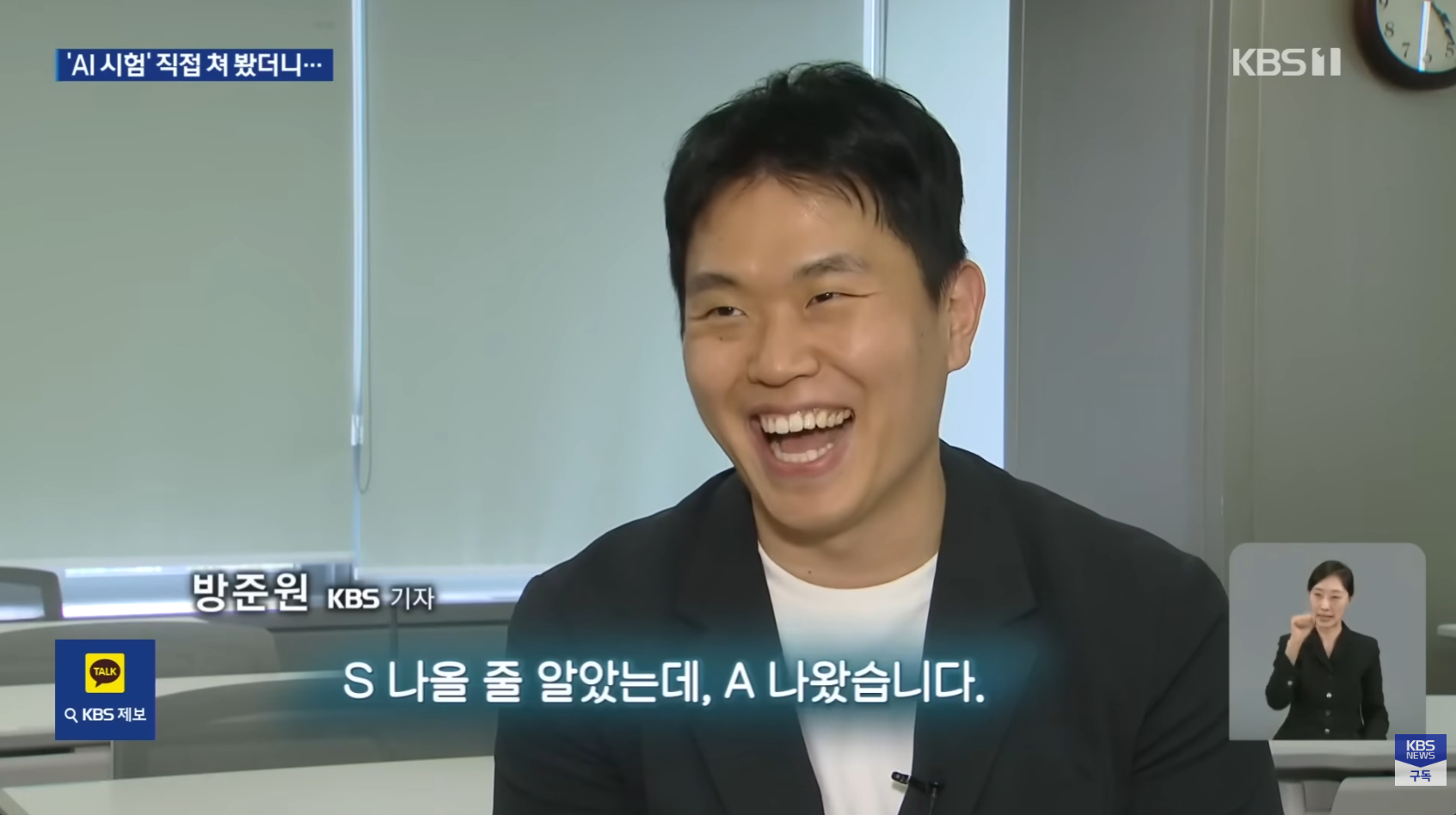
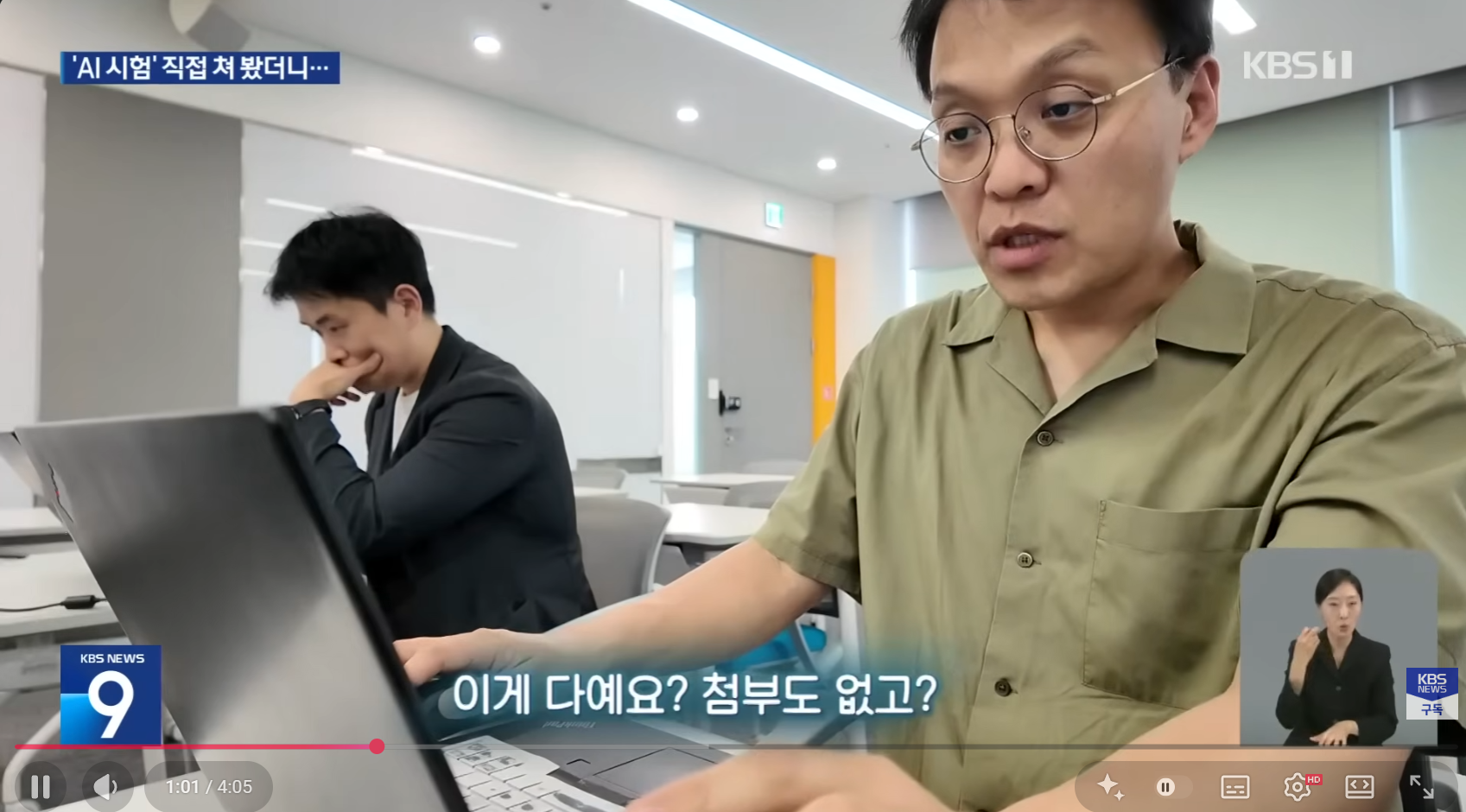
Nine years of experience: A; twenty years: B — even experienced KBS reporters struggled
Reporter Bang Jun-won
- Joined KBS in 2018 (45th intake) · nine years of experience: A
Reporter Kim Jun-beom
- Joined KBS in 2007 (33rd intake) · twenty years of experience: B
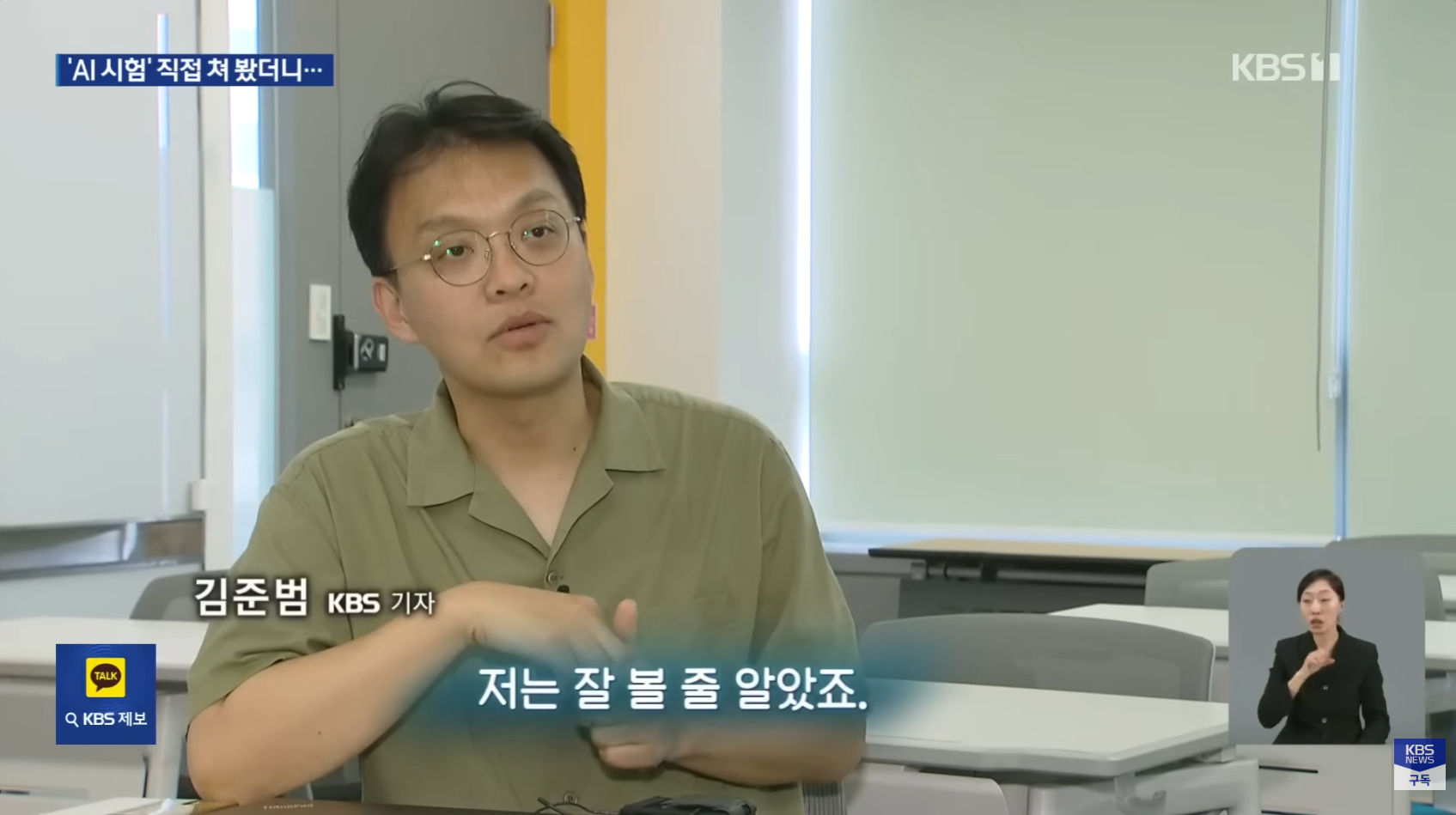
≠
The highest grade is S · Sources: KBS News 9 (2026.06.01); NamuWiki, KBS NEWS staff
Source · Slide 5
Introduction
Two exam stages: literacy, then bootcamp
STEP 1 · AI literacy
- From understanding generative AI to prompting and everyday applications: assessing literacy and execution in real work contexts. STEP 2 · AI bootcamp
Practice building RAG systems and AI web/apps, then design and develop an AI agent and receive certification through a technical assessment.
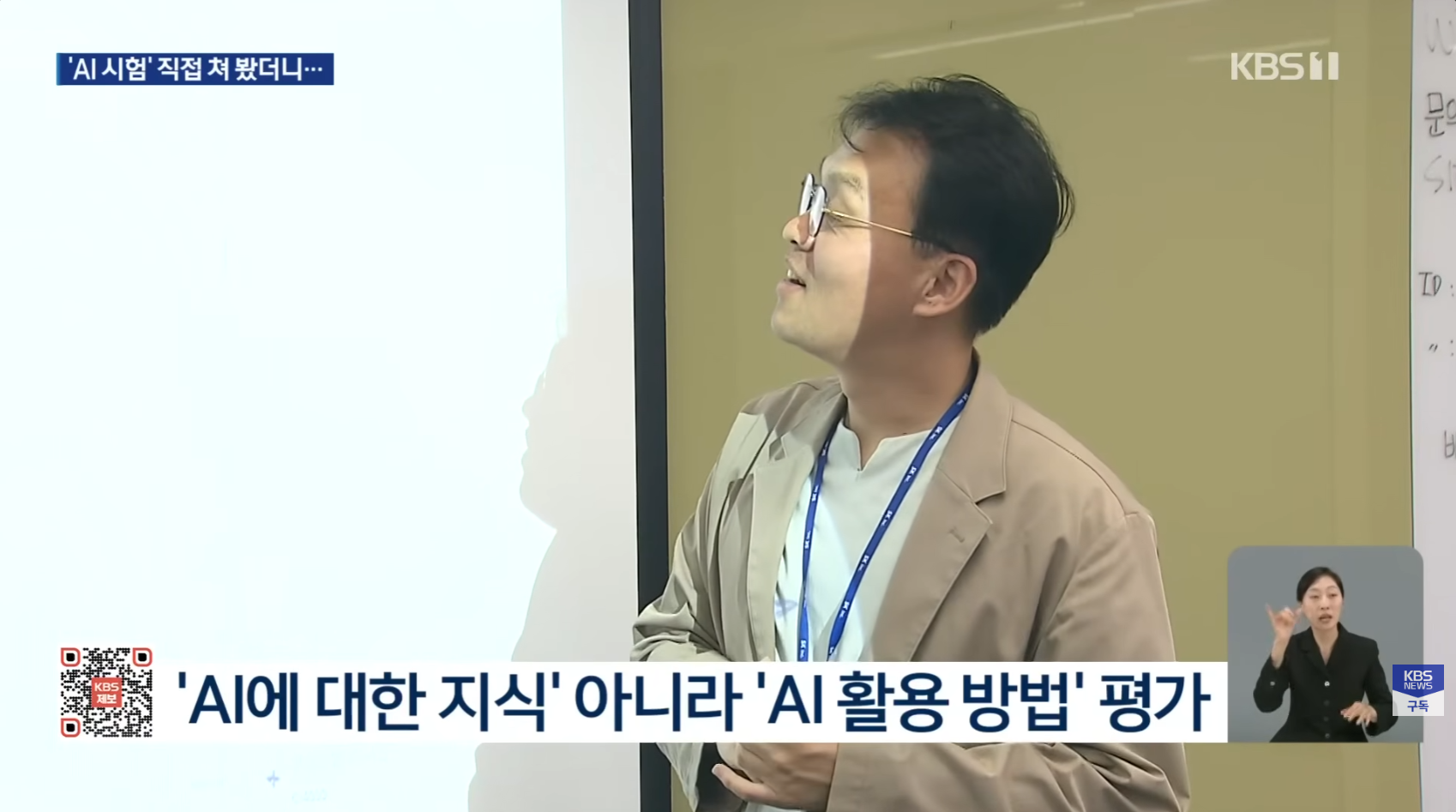
AI use: the process itself is assessed — KBS / SK AX
Source · Slide 6
Introduction
You can solve it without knowing how to code.
The assessment focuses on how well you
structure the problem and approach it
step by step.— Yoon Seong-hwan, SK AX AI testing business team lead (translated quotation)
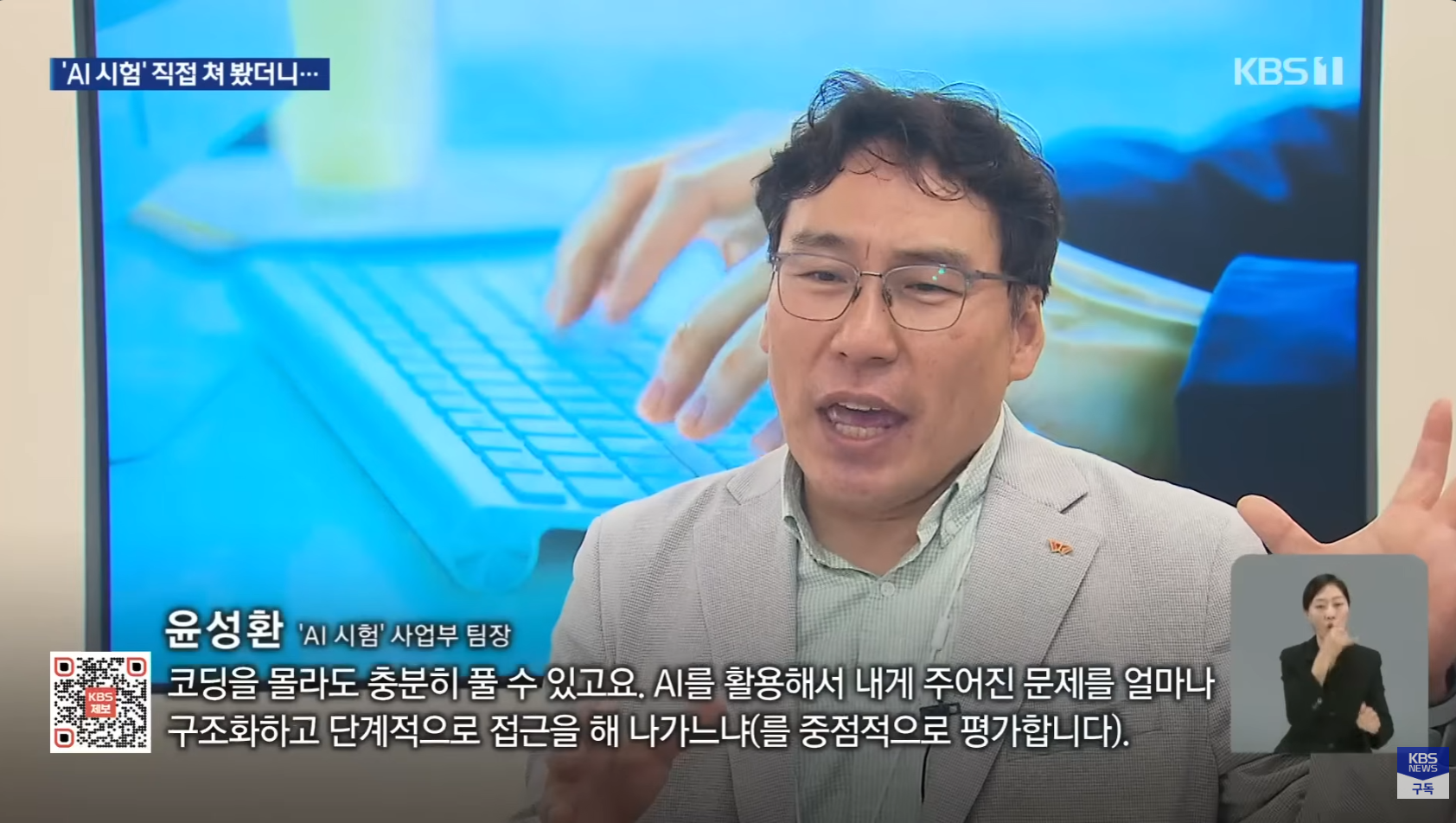
The exam examines the problem-solving process, not just the answer.
Source · Slide 7
In one sentence
Companies have begun assessing
the process of using AI
alongside the finished result.
Source · Slide 8
Introduction
New broadcast producers may soon face the same: three abilities assessed together
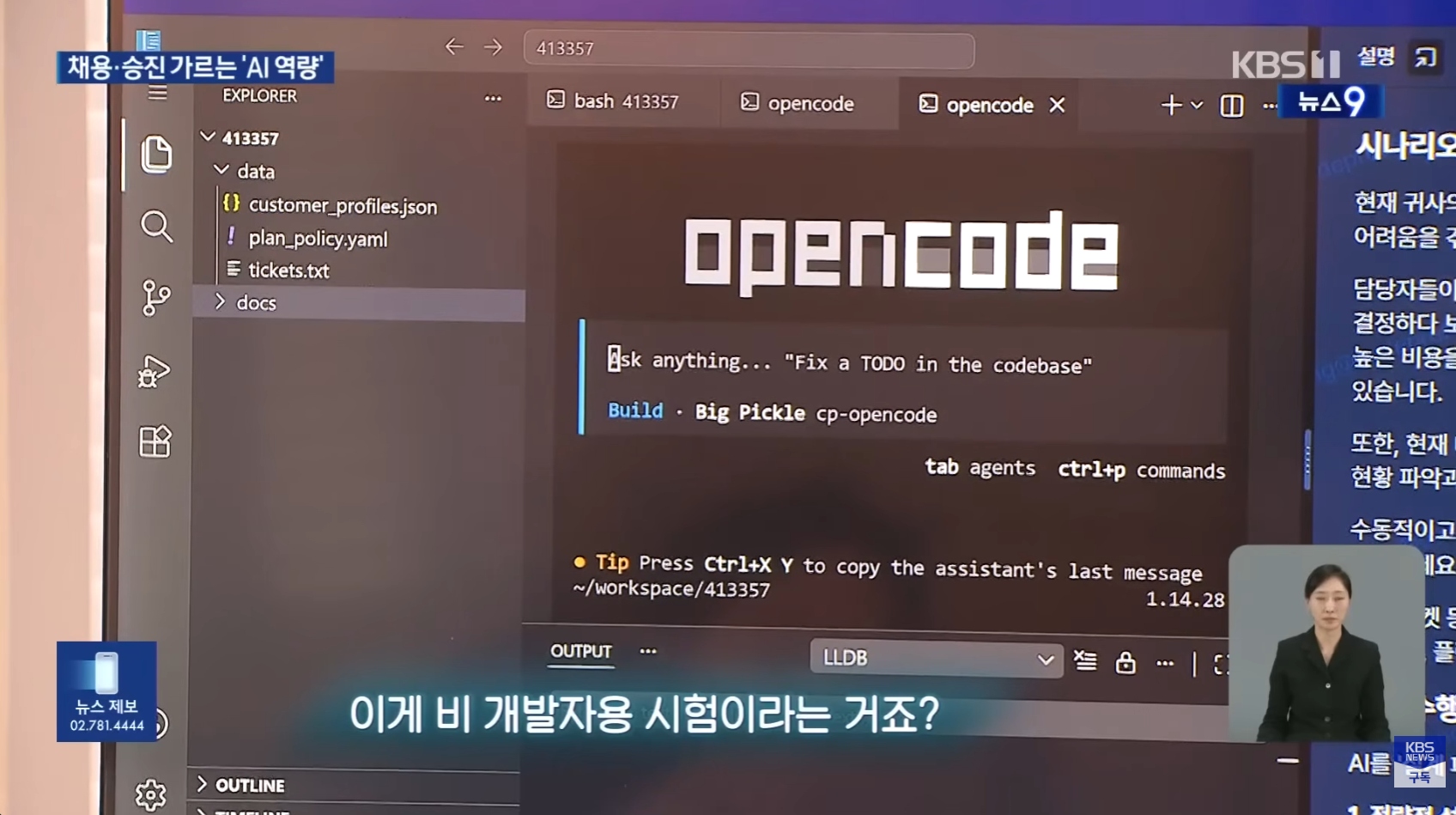
Even non-developers can solve problems through vibe coding — KBS News 9
01
Writing and planning
The ability to design relationships with readers.
02
Structuring work with AI
Breaking a problem down and directing AI step by step.
03
Executing through vibe coding
Demonstrating a dashboard or fact-checking app you have built.
Source · Slide 9
Academia and research
AI use and judgment in academic work
Academia is already looking at
the process
Nature · Frontiers · Wiley surveys (2025–2026)
Source · Slide 10
Academia and research
Of 4,946 researchers worldwide, only 1,043 had actually used AI in research
1,043
— had actually used AI in research (21%)
Even among reported uses, editing was 28% and drafting was below 8%
(Nature survey, as of February 2025)
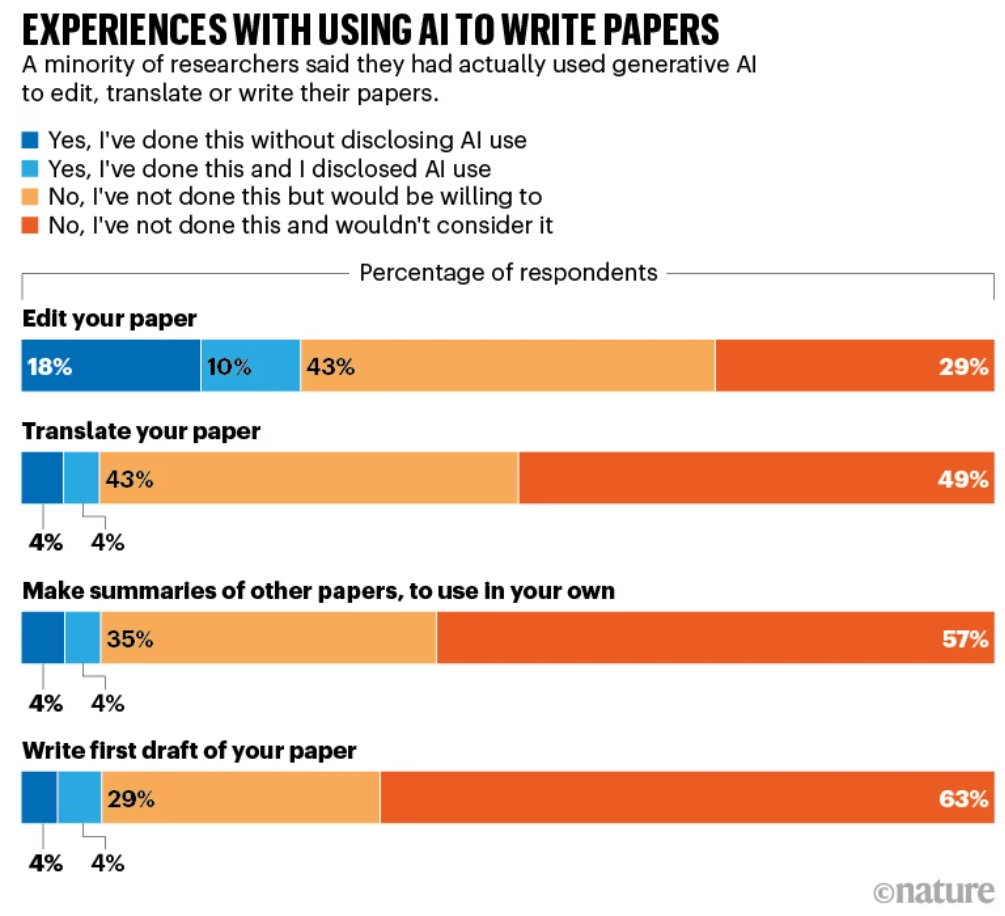
Have you written a paper with AI? Most respondents had not, or did not intend to . Nature and Wiley surveys
Sources: Wiley, worldwide researcher AI-use survey (2025.02.04) · Nature
Source · Slide 11
Academia and research
For 66%, the barrier was not ability but a lack of training or guidance
44% needed AI training
22% did not know where to start
And most expected it
to become commonplace in manuscripts, grants, and peer review soon.
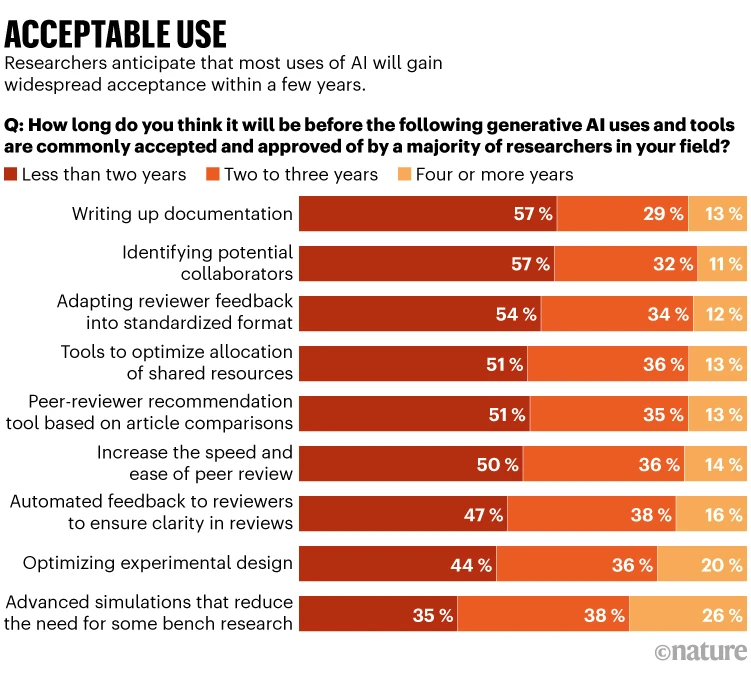
Most uses of AI were expected to become accepted within a few years — Nature
Source · Slide 12
Academia and research
What is acceptable? Editing: 90%; translation: 91%
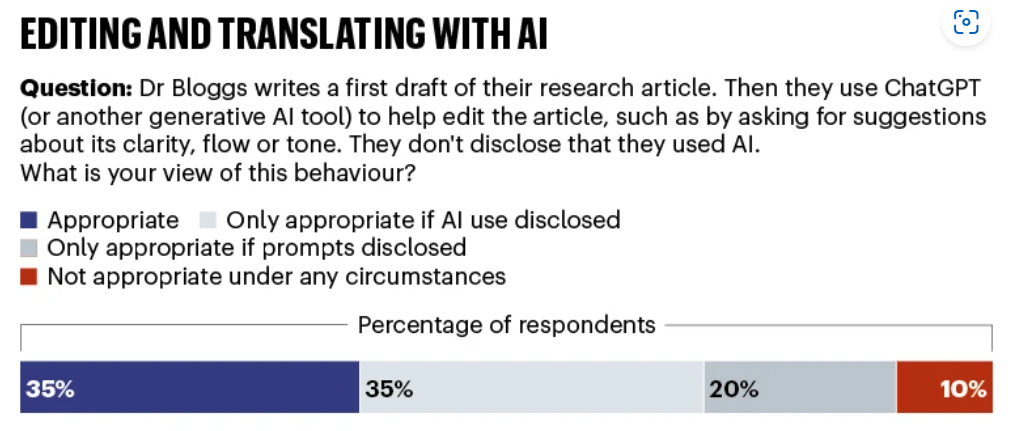
Editing — human-written drafts refined by AI: 90% acceptance
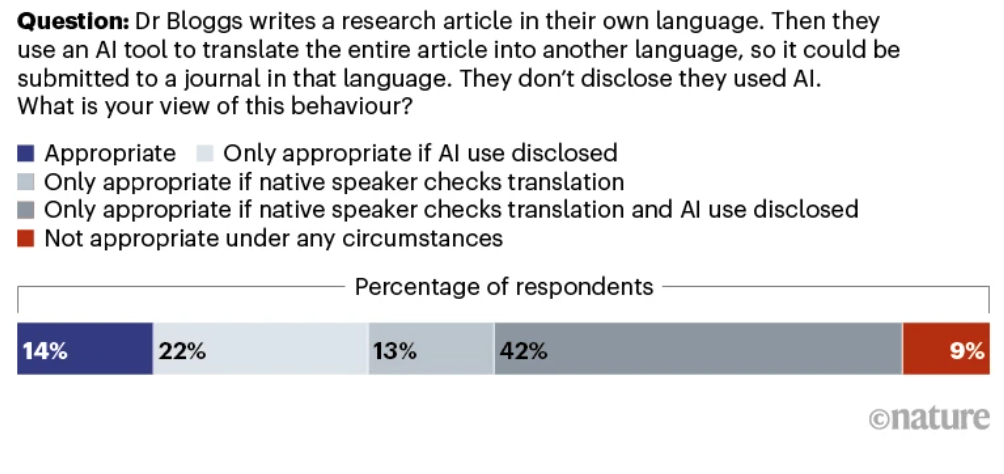
Translation — AI used for a complete translation: 91% acceptance
However, 42% wanted even the translation prompts disclosed. Pressure to disclose the process has already begun.
Source: Nature survey (2025.05.14), around 5,000 respondents · Dr Bloggs scenario
Source · Slide 13
Academia and research
Yet a majority said AI should never be used for Methods, Results, or Discussion
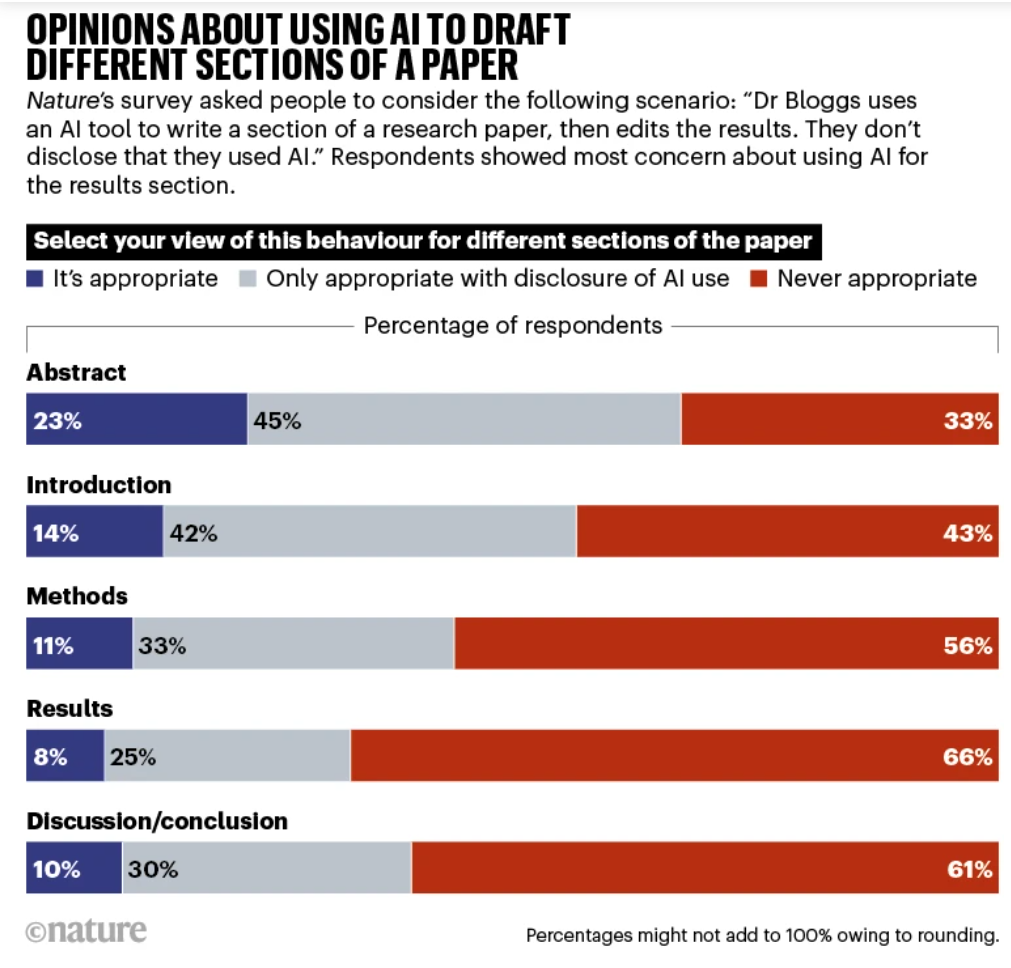
The closer a section is to reporting results, Never appropriate the higher the rejection rate — Nature
Abstracts and introductions receive more tolerance.
AI supports productivity; judgment remains human.
Source · Slide 14
A key finding
People who had used AI
were more positive about its use.“respondents’ self-reported experience with AI for writing or reviewing papers did correlate strongly with having favourable opinions of the scenarios.”
— Nature survey analysis (2025.05.14)
Attitudes differ through experience, beyond simple support or opposition — and experience accumulates through records.
Source · Slide 15
Hao et al. 2026 (Nature)
Papers that used AI as a tool were far ahead
3.02×
Number of papers published
4.84×
Citation count
−1.37 years
Time to promotion as a team leader
Analysis of 41.29 million papers, 1980–2025 · Natural-science papers using AI as a tool · Hao et al., Nature (January 2026)
Source · Slide 16
A paradox
Yet instead of opening new topics, AI encouraged
already popular topics
to be repeated.
Even new papers end up citing the first original: dissemination accelerates while thinking narrows.
Source · Slide 17
The key point
The question was not simply whether AI was used,
but whether researchers had their own original data.
Source · Slide 18
Peer review
A reversal in just seven months
May 2025 · Nature
52% strongly opposed AI in peer review
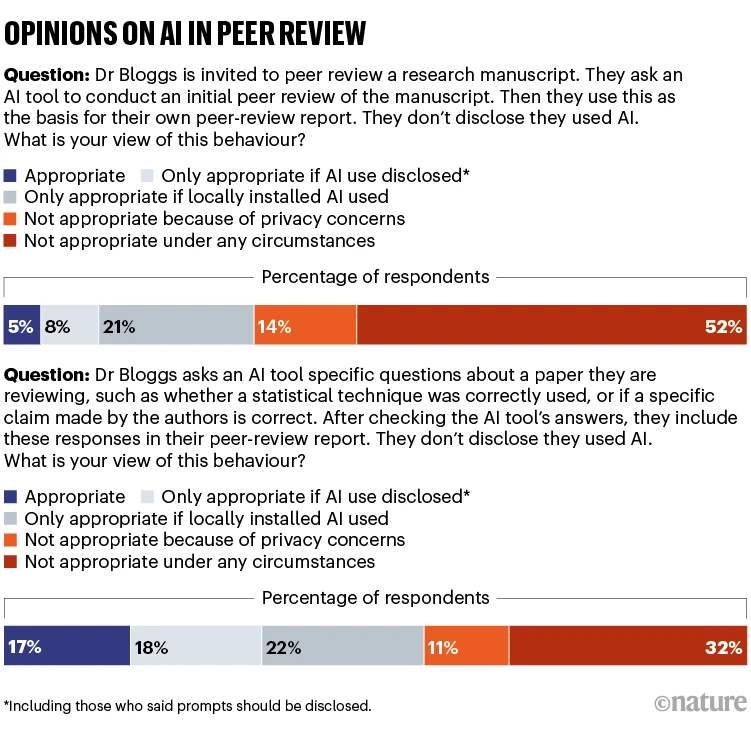
December 2025 · Frontiers
55%
Already using AI in peer review (around 1,600 respondents worldwide)
Seven months
Source · Slide 19
Frontiers 2025: overall recommendations
Six academic recommendations, all pointing toward process
01
Transparency and responsibility
Disclose when, where, and how AI was used
02
AI literacy education
Structured education and accredited programs
03
Ethics and integrity
Human accountability, bias testing, and reproducibility audits
04
Equity and access
Ensure equitable access to AI skills
05
Community participation
Develop policies together and establish feedback mechanisms
06
Policy leadership
Contribute to global standards
Source · Slide 20
One recurring word
Validate the process
Teach the process
Assess the process
Source · Slide 21
Then
where do you store
that process?
In a GPT chat? Context resets whenever you open a new conversation.
In your head? You must reconstruct it from scratch whenever you need it.
Source · Slide 22
Journalism education
The human role that journalism demands
Journalism education
Where is it heading?
ACEJMC · Columbia · USC · Columbia Journalism Review
Source · Slide 23
ACEJMC (US journalism accreditation)
Core graduate competencies: the same four abilities
Find
Use appropriate tools to present images and information effectively
Evaluate
Apply critical thinking to research and evaluate information
Verify
Critically check accuracy, fairness, clarity, and basic numerical and statistical information in the work
Express
Write for the intended audience and purpose accurately and clearly
Source · Slide 24
Yet
all these competencies
depend on a habit
of keeping records.
Source · Slide 25
Columbia Journalism School (CJS 2030)
Learn. Build. Critique.
It emphasizes finding, collecting, and analyzing material, and explicitly calls on
individuals to build their own digital archives.
Data journalism is a working environment that retains material, sources, analysis, and judgment, beyond one-off prompts.
Source · Slide 26
USC AIMS × Columbia Journalism Review
Eighteen journalists were asked:
How do you use AI?
Source · Slide 27
Journalists' accounts · 01 / 04
AI is for productivity,
not for writing.“As much as I believe that AI helps my productivity, I refuse to use it for writing.”
— Emilia David · VentureBeat
Hand writing over to AI and you lose both your relationship with readers and the skill itself.
Source · Slide 28
Journalists' accounts · 02 / 04
On its own, AI is
only a parlor trick.“AI on its own is a parlor trick … useful when paired with properly structured data and someone who knows what they’re doing.”
— Zach Seward, head of AI at The New York Times
AI needs structured data and domain knowledge to work: the reason for personal knowledge management.
Source · Slide 29
Journalists' accounts · 03 / 04
Treat AI as hands,
not as a brain.“I don’t fear AI if it’s used as a hand, not a brain.”
— Susie Cagle
The judging brain is human. Delegating it to AI may be faster, but becomes less human and less truthful.
Source · Slide 30
Journalists' accounts · 04 / 04
A smart assistant that can also produce nonsense:
I ask it to verify only after uploading my own draft and interview transcripts.“I’ll upload sections of my book, along with interview transcripts … I would never ask it to write anything, though.”
— Nicholas Thompson · The Atlantic, CEO
AI begins to work when humans provide primary material and records.
Source · Slide 31
A shared structure
Journalists who use AI effectively follow the same pattern
01 · Human
Create primary material
- Create original data through reporting, recording, and writing: ▶
02 · AI
Assist
- Organize, verify, summarize, and translate (AI as hands): ▶
03 · Human
Make final judgments and publish
- If AI is the only source, do not publish: Ben Welsh(Reuters)·Sarah Cahlan(WaPo)·Khari Johnson(CalMatters) — CJR “How We’re Using AI”(2025.05.12)
Source · Slide 32
Conclusion
The better journalists use AI,
the more systematically they accumulate
their own primary material. = PKM
Without structured personal knowledge, AI remains a parlor trick.
Source · Slide 33
Northwestern University
Repeatable action and records
Agentic Investigation Challenge — an ongoing challenge at the time of the presentation

$5,000 prize · Deadline July 15 · Judging August 15 — an AI-assisted investigative journalism competition
Submit more than a single AI-assisted story:
submit the full record of how you used AI.
Source · Slide 34
What to submit
Four deliverables: documenting process alongside results
①
Agent Skills
Reusable AI workflow (directory)
②
Findings (PDF)
A findings report incorporating external material
③
Interaction Traces (JSON)
Complete logs of inputs, tool calls, outputs, and interventions
④
README.md
A Markdown index connecting the entire structure
Source: Agentic AI Investigative Journalism Challenge, Northwestern (ongoing in June 2026)
Source · Slide 35
① Agent Skills
A repeatable procedure that produces the same result
in nine out of ten runs
Knowledge assets that are structured and stored, beyond disposable prompts.
Source · Slide 36
③ Interaction Traces
Inputs, tool calls, outputs,
and the moments when I intervened to correct them:
the complete logs.
A workflow that disappears when the chat closes cannot do this. A separate system for storing and managing records is needed.
Source · Slide 37
The decisive point
Without files,
you cannot even submit.
GPT web chat → traces disappear ✗
Local records (PKM) → ready to submit ✓
Source · Slide 38
Records
A structure for records that retain the process
Ultimately, it comes back
to records
To assess a process, that process must be retained somewhere.
Source · Slide 39
Putting it together
Three paths point to one destination
Companies
SK AX
Assess the process of structuring and solving problems alongside outcomes
Academia
Nature · Frontiers
Move beyond whether AI was used toward disclosure of prompts and workflows in practice
Journalism
Northwestern
Require records and verification of the entire reporting and working process throughout the work
One common thread: attention to process.
Source · Slide 40
The evolution of AI use
Five stages of AI: from prompts to harnesses
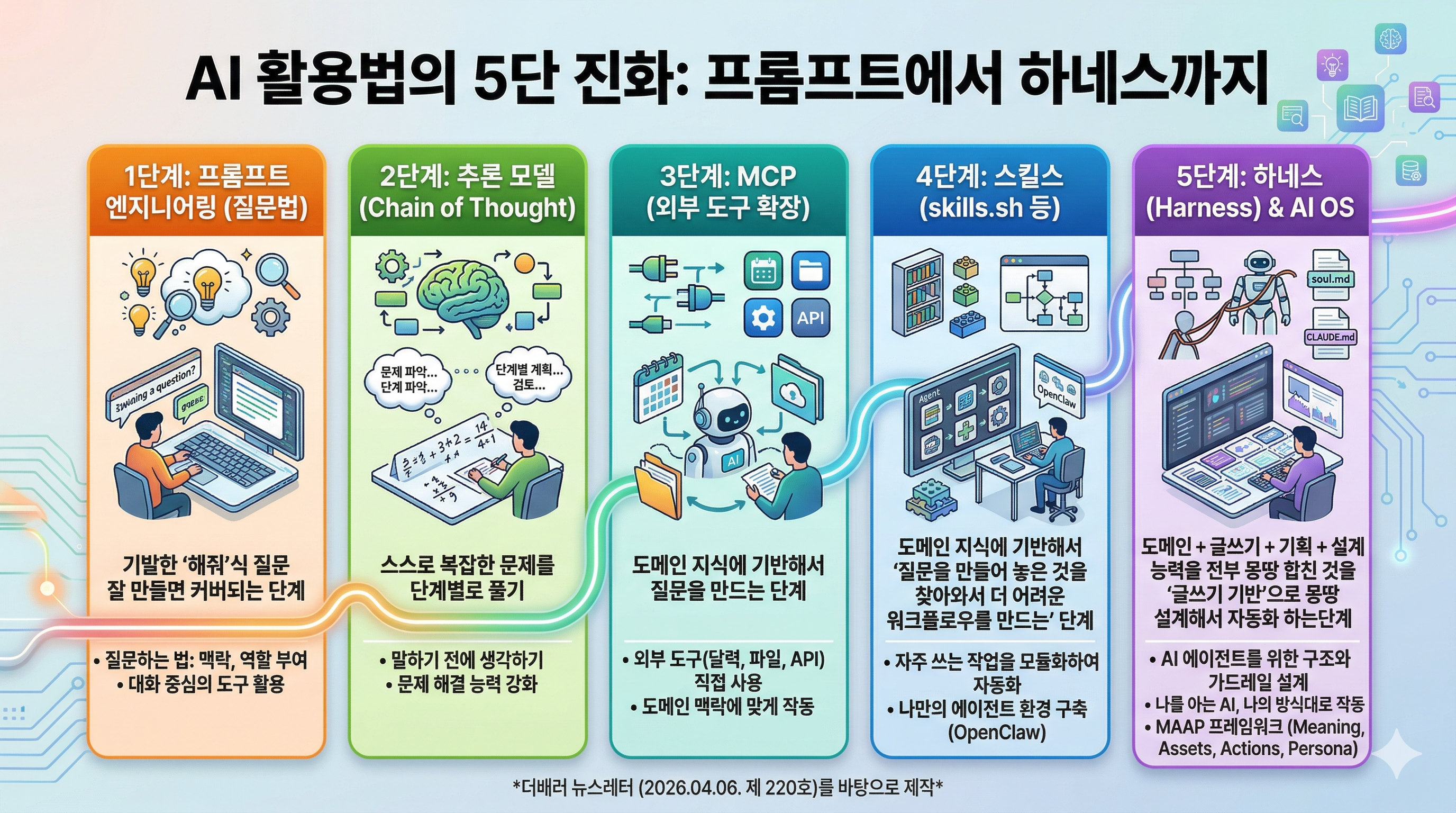
Prompts → CoT → MCP → Skills → Harnesses & AI OS
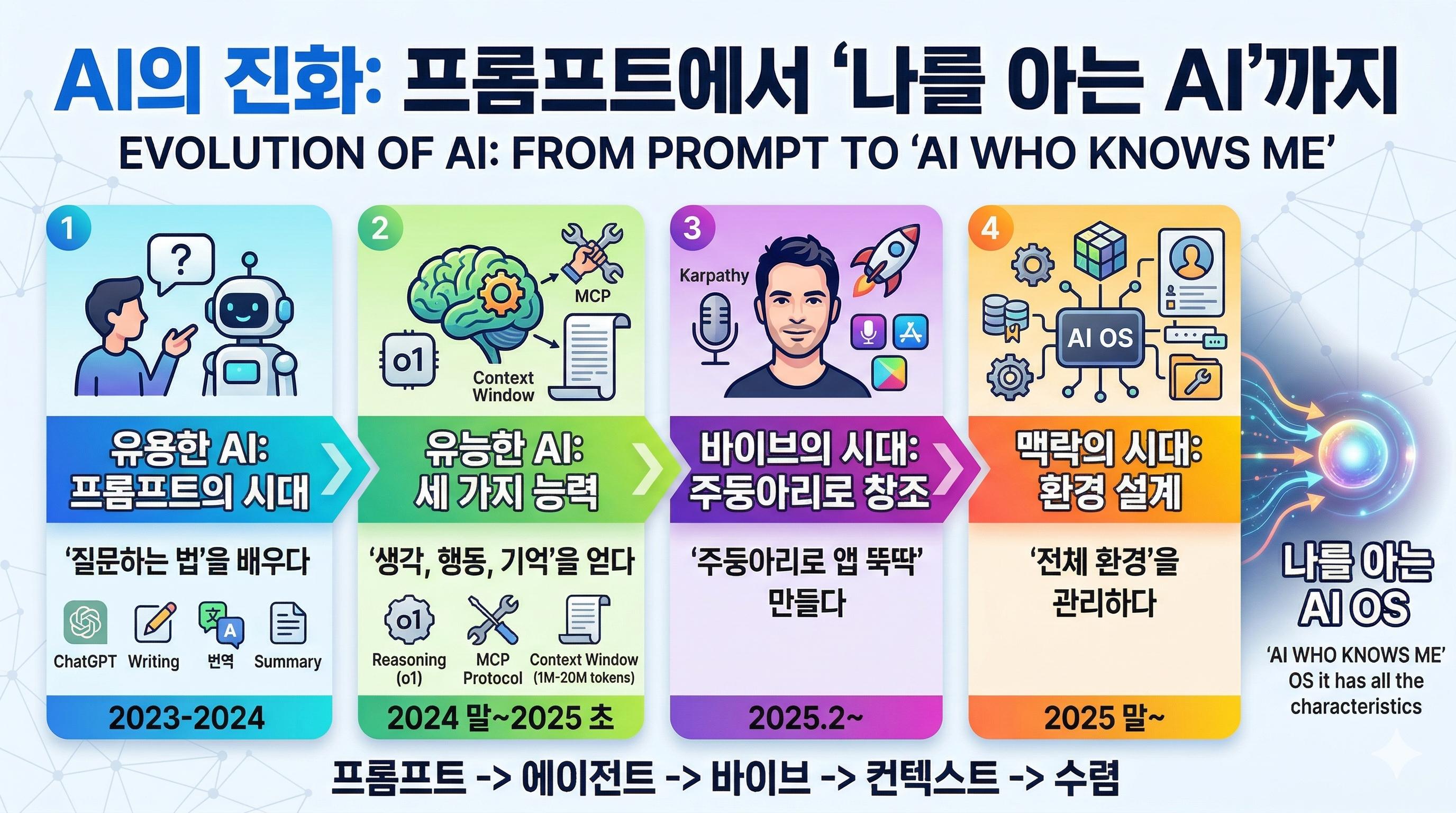
Another account of the same trend: convergence on AI that knows me
Source: The Better Newsletter, issue 220
Source · Slide 41
National standard
The national AI strategy committee adopted Markdown as a standard document format

National AI Strategy Committee press release (2026.03.05)
Markdown (.MD)
A document format that uses simple symbols for headings, paragraphs, and contents instead of complex formatting, making it easy for both humans and AI to read.
The stated concern is that extensive formatting in existing HWP documents makes their structure difficult for AI to recognize.
Source · Slide 42
The form of a record
The same file: clean to human eyes, broken for AI
Human view (Hangul .hwp)
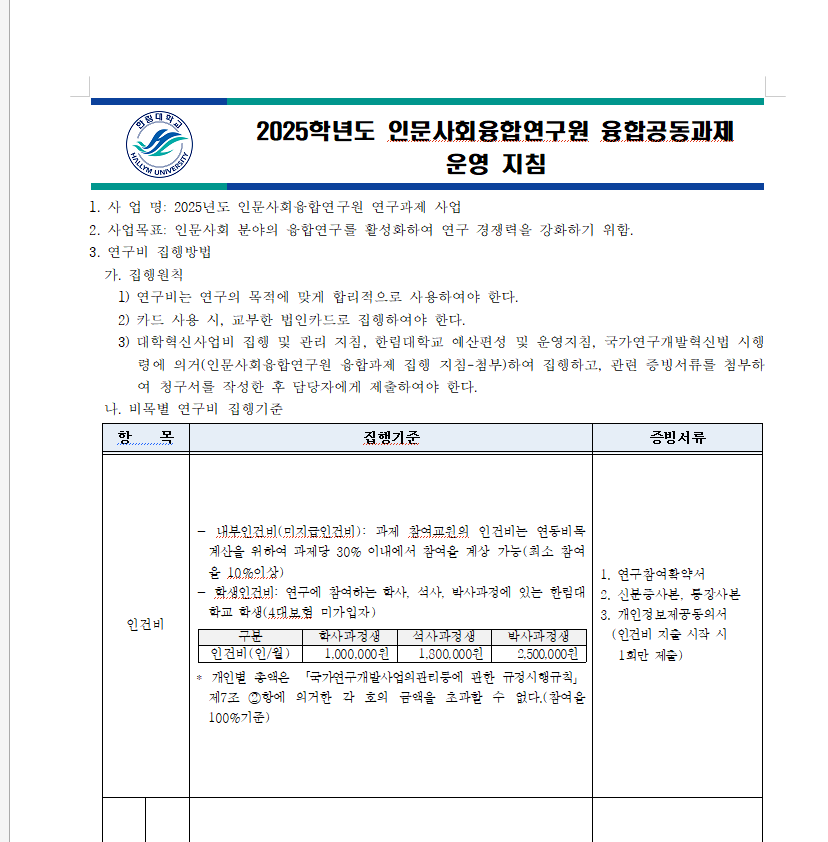
AI view (opened in a text editor)
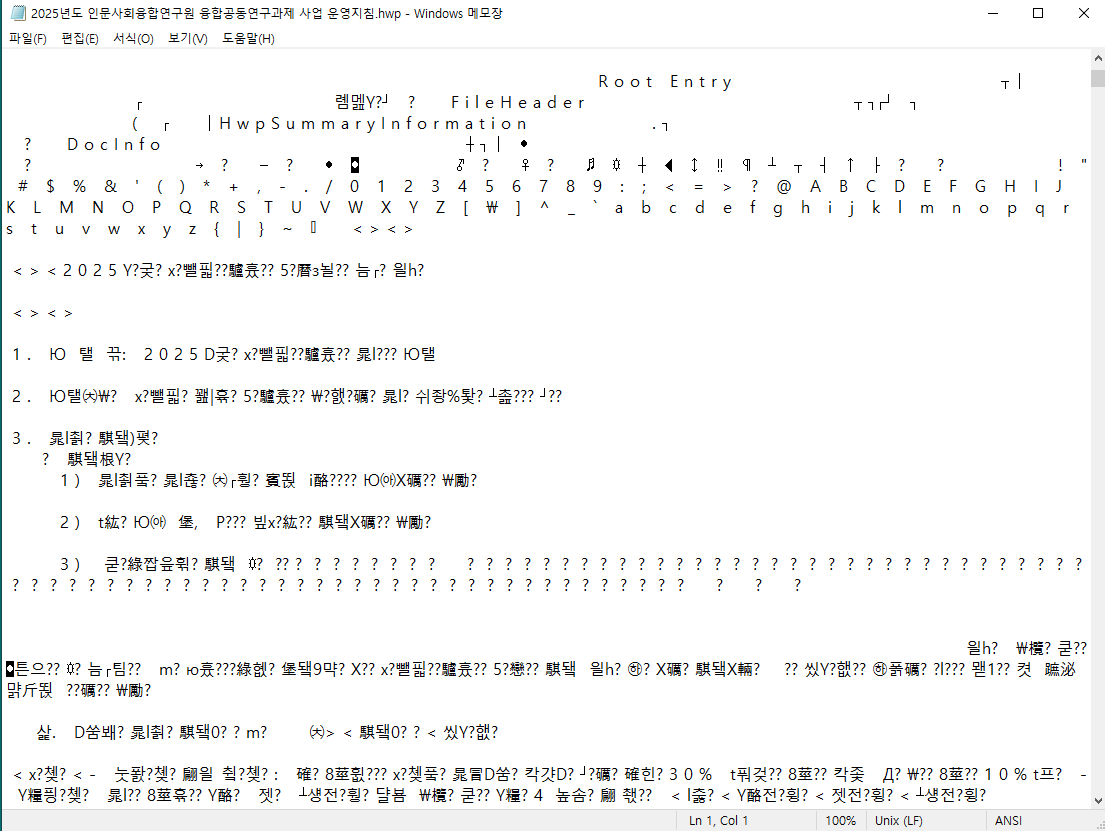
=
Source · Slide 43
The critical issue
The issue is the form of the record, not simply whether one exists
| Common objections | The underlying problem |
|---|---|
| But I organized everything in Hangul or Word. | A closed container: AI cannot read it |
| But I wrote it in a notebook with a pen. | It cannot be searched, reproduced, or connected |
| But it is all there when I log in to GPT. | Separate chat windows do not connect with one another |
Having a record and having a record that AI can read are very different things.
Source · Slide 44
In the classroom: Odyssey Seminar 3, spring 2026
I interviewed 16 students.
All said they used AI
and kept records.
Source · Slide 45
Three shared findings from the interviews
I know, but I do not act
01
Little more than temporary storage
Notebooks, text editors, and messages to oneself in KakaoTalk. Experience exists, but there is no process for converting it into knowledge.
02
Existing only in one's head
There is plenty of observation and reporting, but the process is not retained:
portfolios are reconstructed from memory.
03
Awareness ≠ Action
Everyone agreed on the need.
They simply did not know where or how to begin.
Source · Slide 46
The key point
Memory fades,
but records accumulate:
this is a question of design, not willpower.
Source · Slide 47
TL;DR · Markdown is all you need
The problem is not a lack of records.
The records are not in Markdown,
so AI cannot read them.
Source · Slide 48
How to store it
A workspace separating collection, understanding, and action
How should .md files
be stored?
CMDS LLM Wiki · CMDS Vault · Achmage OS — a three-part architecture
Source · Slide 49
A three-part architecture
The key is separating collection, understanding, and action
Collection
CMDS LLM Wiki
- **AI automatically collects quality material, reducing the effort of searching:** understanding
CMDS Vault
- Only what I have read, understood, and written myself (no AI): Execution
Achmage OS
A system that shortens and standardizes repeated production.
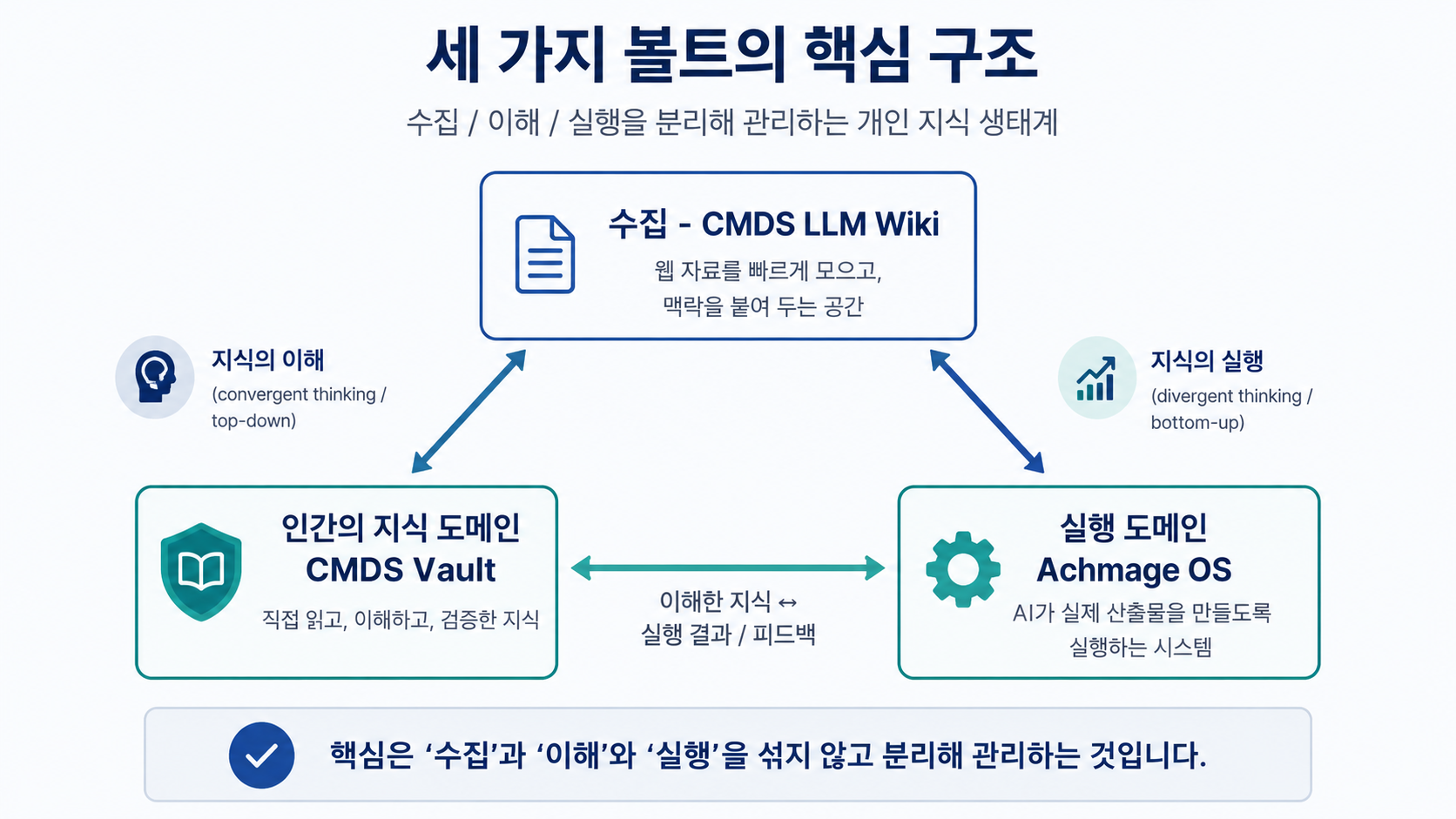
Manage collection, understanding, and execution separately
Source · Slide 50
What the three spaces do
A place to collect, a place to understand, a place to create
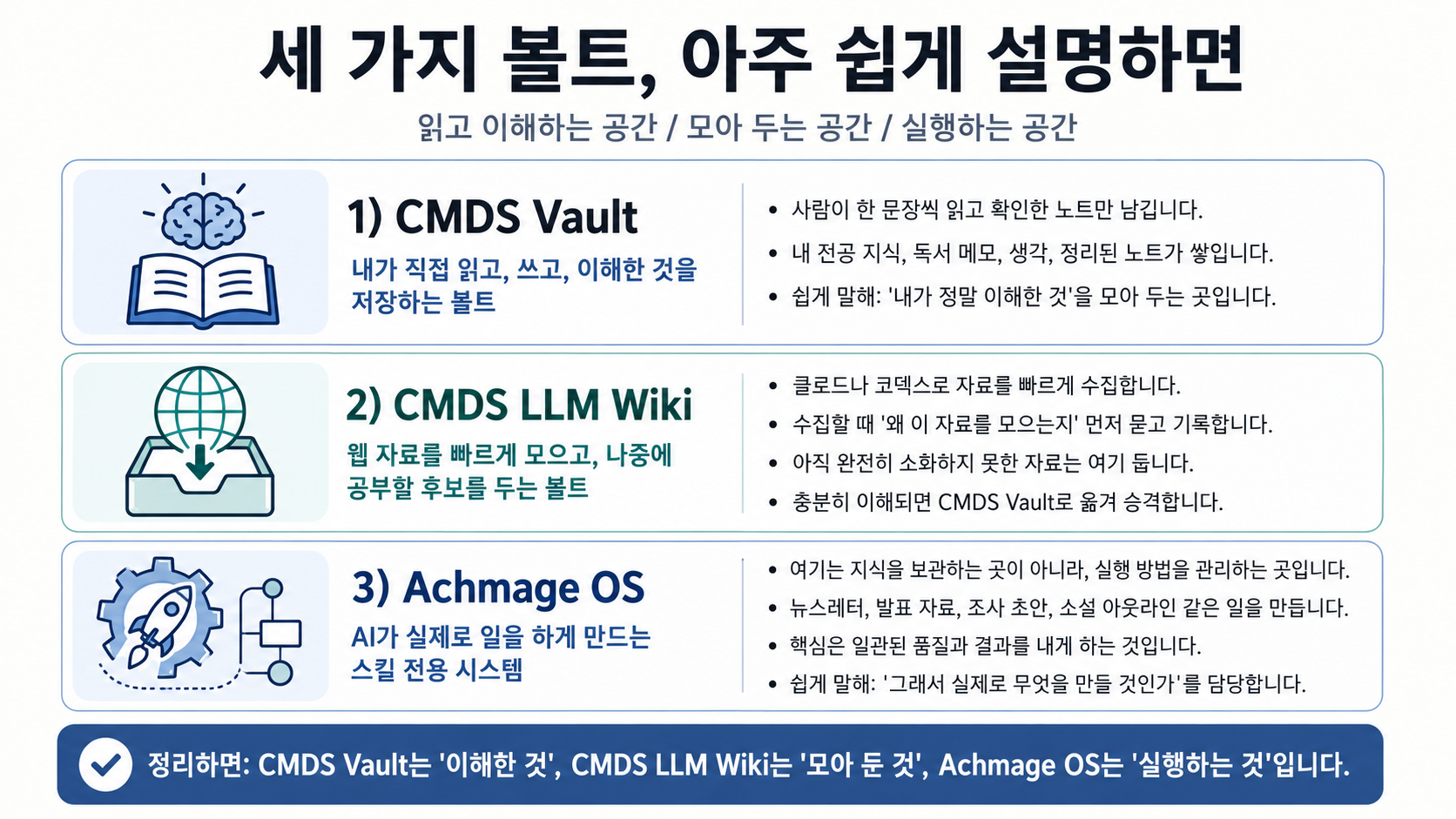
Three vaults, simply: store / collect / execute
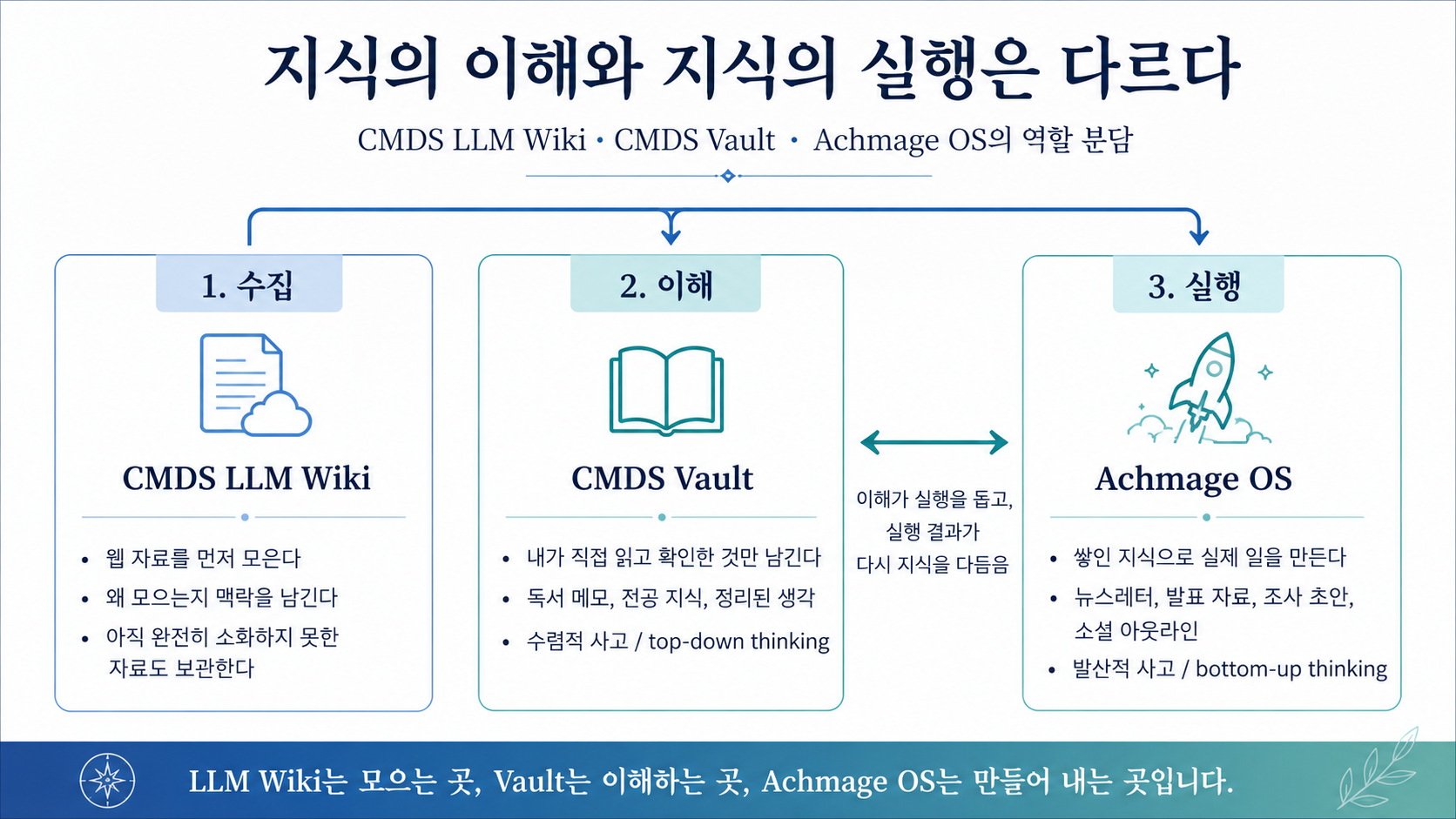
- Collection ≠ Understanding ≠ Execution: distinct roles LLM Wiki collects; Vault supports understanding; Achmage OS produces.
Source · Slide 51
A daily workflow
Collect material → Judge understanding → Accumulate knowledge → Act
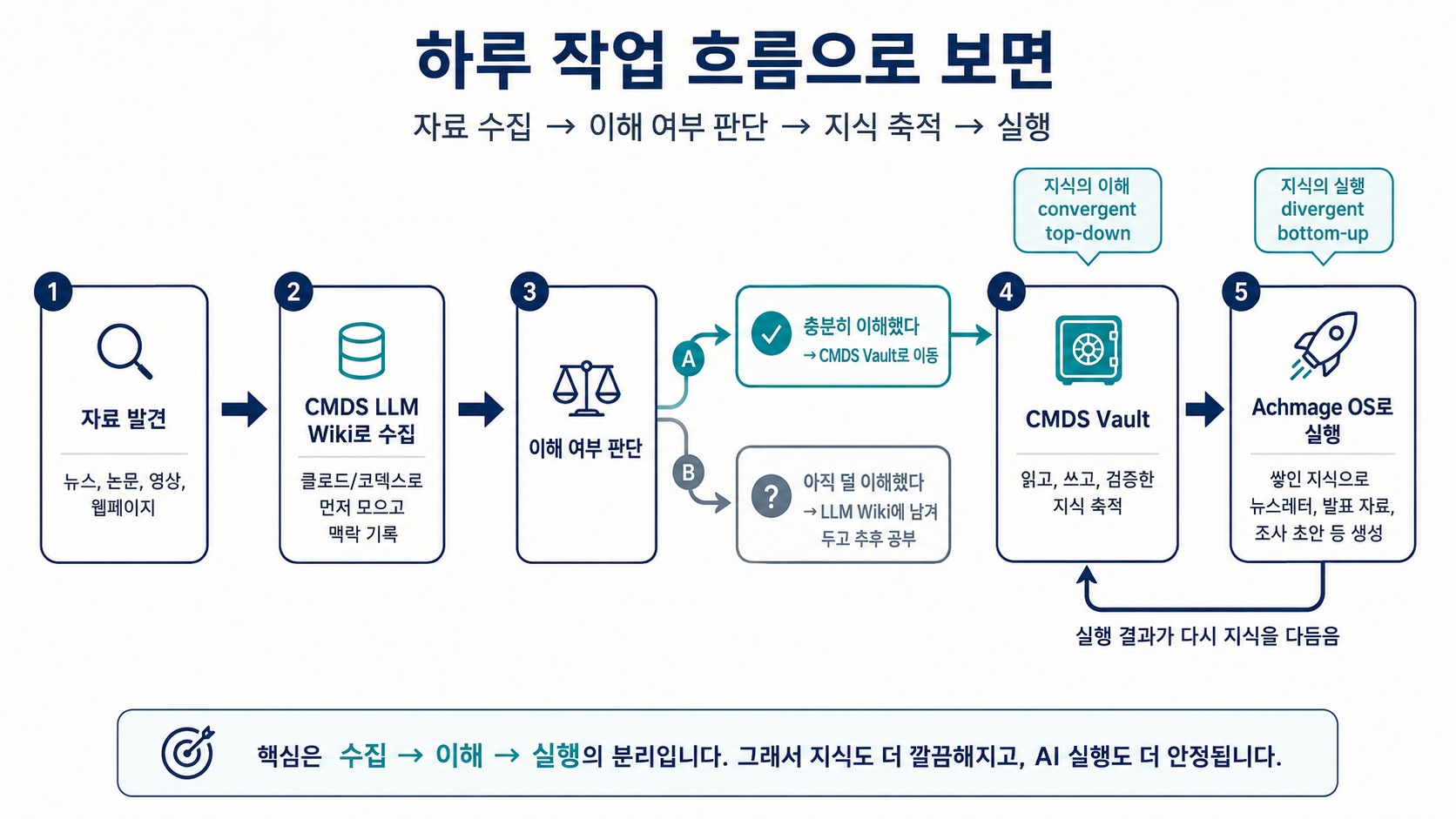
Separate collection, understanding, and execution to keep knowledge organized and AI execution stable
Source · Slide 52
A student's personal newsroom
Research desk · Editorial and reading notes · Production desk
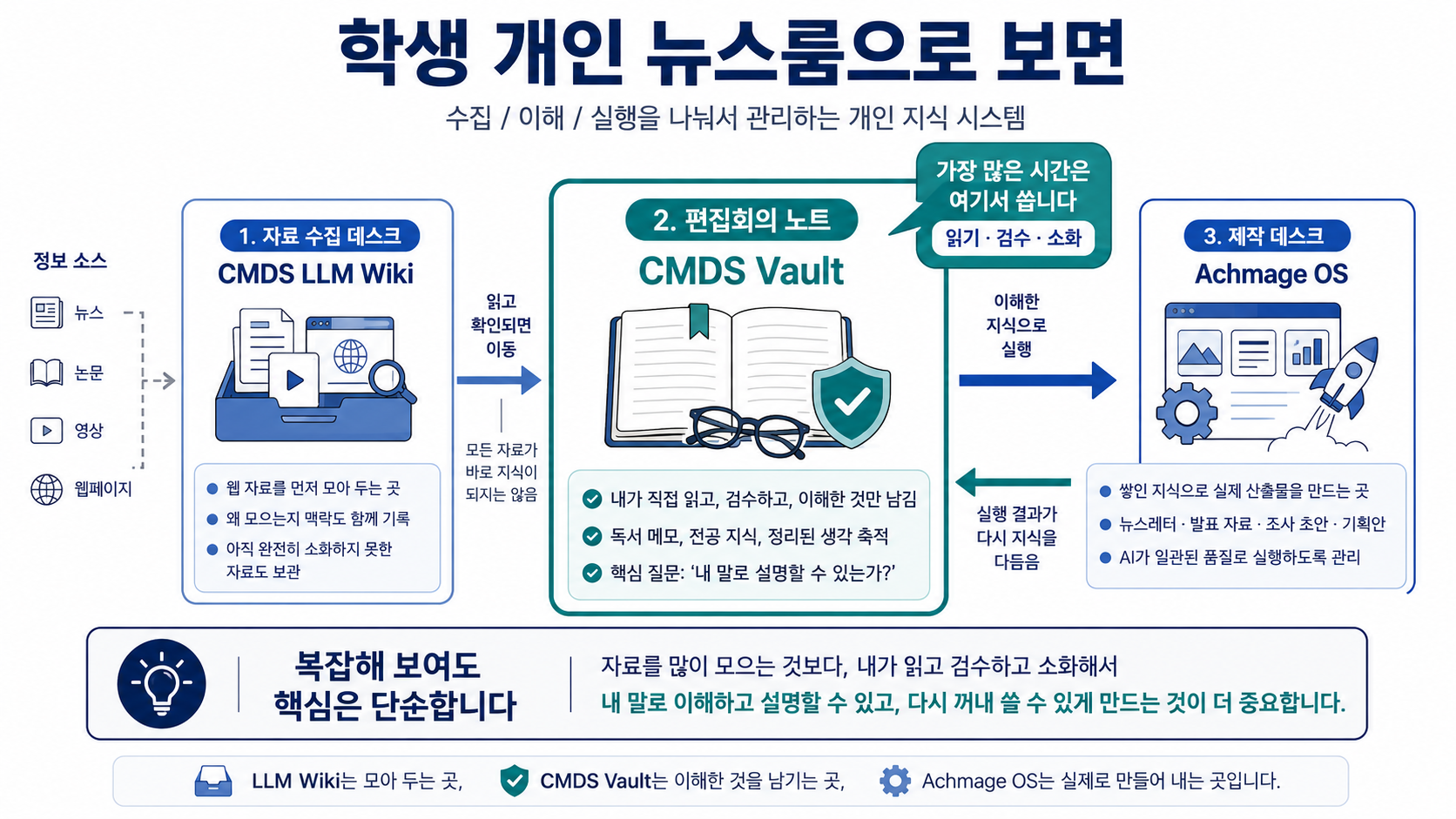
Spend the most time on editorial and reading notes (Vault)
LLM Wiki
Collect and supply material to the editor
Vault
Read, review, and digest: the largest time investment
Achmage OS
Less repetitive production, more attention to content
Source · Slide 53
The key point
Beyond tools, ask:
What knowledge am I collecting,
for what purpose, and why?
Source · Slide 54
Ten principles
Ten principles for sustained reading and writing
Beyond tools:
principles of thinking
Keeping records is a practice
Ten commandments: principles for people who keep records
Source · Slide 55
Keeping records is a practice · 1–5
1
Write even a single line yourself: one line of my own over a thousand written by AI.
2
Even outside your main interests, save what you read closely for more than ten seconds .
3
Think in terms of #hashtags rather than folder classifications.
4
Prioritize the density of notes over their number — 2,400 AI notes < 24 notes I wrote myself.
5
Use your own words, clearly enough to explain in ten seconds in an elevator.
Source · Slide 56
Keeping records is a practice · 6–10
6
There is no later — take the note now and move it into Markdown.
7
Keeping records is a habit — like exercise, even three lines every day.
8
Explain to others: share and teach — that is how you become confident that you understand.
9
Divide the work between AI and me — AI collects and processes; I read, review, and analyze.
10
Note-taking is a process toward note-making — keep reading until a thought emerges.
Source · Slide 57
Reading Discussions Become a Newsletter
Hallym University Media School Colloquium · 2026.06.10
Reading discussions become
a newsletter
Writing becomes media. Keeping records is a practice.
Presented by Achmage (안창현) · Thank you
Source · Slide 58